
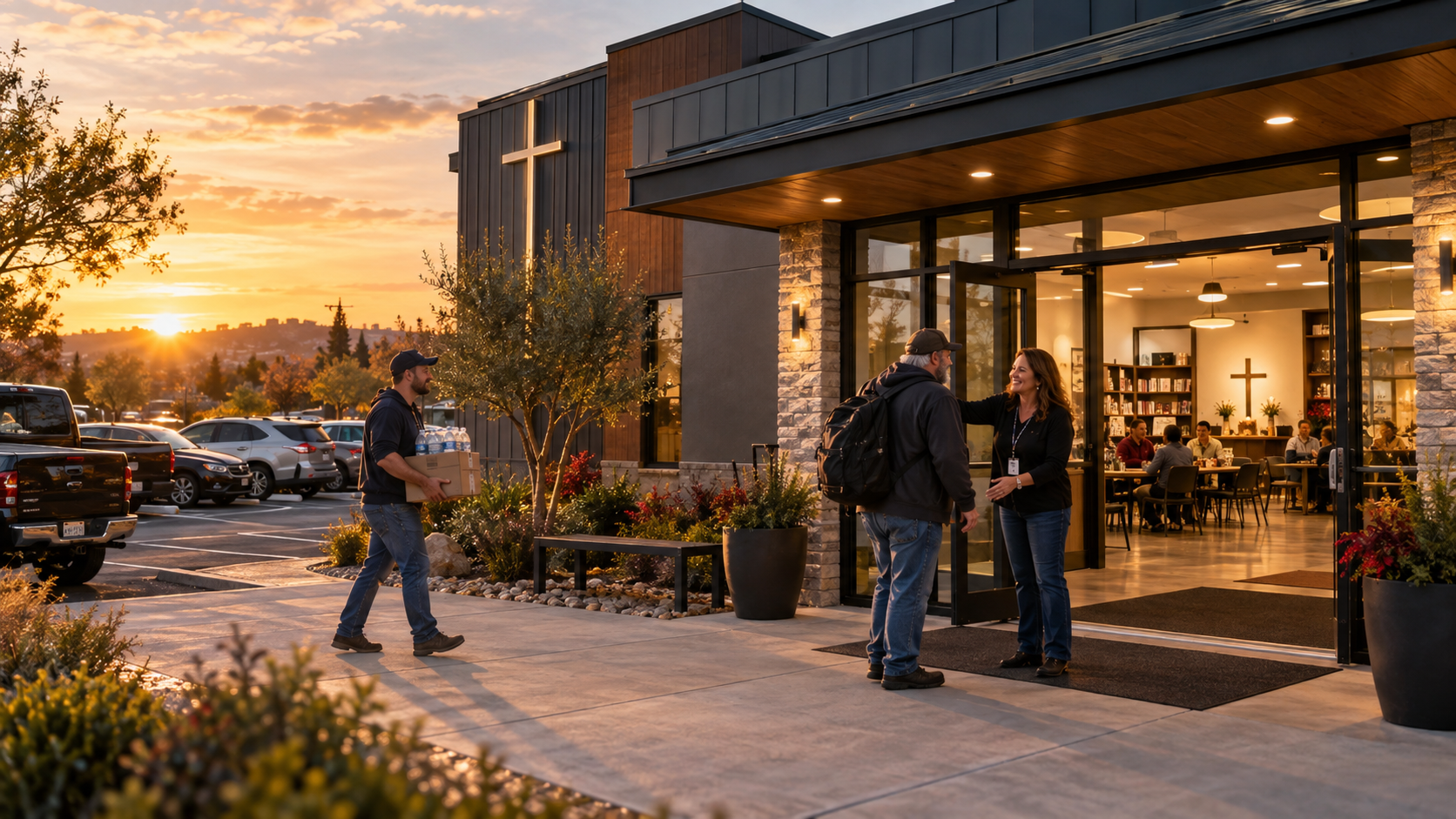

Welcoming Ministry Space: Why Access, Parking, and Dignity Matter in Outreach
A welcoming ministry space does more than provide an address. It can make prayer, practical care, trusted connection, and the next right step easier for people to reach.
A welcoming ministry space can shape the first moments of outreach before a conversation even begins. People may arrive carrying stress, uncertainty, embarrassment, or a practical need. Therefore, clear access and a calm welcome matter.
The Gospel Rescue Mission is a Christian outreach ministry focused on prayer, practical care, resource connections, pop-up outreach, dignity, and Gospel hope. A physical ministry space can support that work when people understand how to arrive, where to go, and what their next step can be.
Ministry access is not only about a building. Instead, it is about removing unnecessary confusion between a person and the care they are seeking.
A welcoming ministry space begins before the front door.
People decide whether a place feels approachable long before they sit down with a volunteer. For example, they may notice the parking area, entrance, signs, lighting, and overall condition of the property.
Clear arrival information can reduce uncertainty. Likewise, an easy-to-find entrance can help someone feel more confident about walking inside.
TGRM already gives people online starting points through Need Help and Resources. A future physical space should continue that same idea: make the next step easier to understand.
Easy Arrival
Clear directions, visible entrances, and practical parking can remove unnecessary stress.
Calm Welcome
A respectful first interaction can help people feel received instead of processed.
Clear Next Step
Prayer, resource direction, conversation, or practical care should be easy to understand.
Parking can become part of ministry access.
Parking may sound like a small operational detail. However, it can directly affect whether volunteers, families, partner churches, and people seeking help can arrive comfortably.
A useful parking area also supports outreach preparation. Volunteers may need to unload supplies, organize materials, meet before an event, or help someone enter safely.
In addition, parking gives a ministry flexibility. It can support scheduled appointments, volunteer gatherings, small outreach events, and other forms of practical service.
Dignity should shape every step from arrival to conversation.
People should not feel exposed, rushed, or treated like a problem to solve. Instead, Christian outreach can communicate patience, respect, prayer, and compassion.
When the arrival experience feels thoughtful, the environment can support a deeper message: you are seen, your story matters, and there is room to take the next step.
Accessibility should be practical, not assumed.
Different people arrive with different needs. Some may have limited mobility, transportation challenges, children with them, or difficulty navigating unfamiliar places.
Because of that, a ministry should think about entrances, walking distance, restrooms, seating, lighting, pathways, and clear communication. These details can make a meaningful difference.
Accessibility also includes information. A visitor should know whether help requires an appointment, whether an event is open, and whom to contact with questions.
Prayer should remain easy to reach.
Not every person begins by asking for material help. Sometimes, the first request is simply prayer.
Therefore, prayer should remain a visible part of the ministry pathway. Someone who is not ready for a long conversation may still be willing to share what is weighing on their heart.
Visitors can also share prayer requests through Lift My Prayer. That connection creates another way for people to reach prayer even when they are not physically present.
Practical care works better when expectations are clear.
A welcoming space should not promise every kind of help. Instead, it should clearly explain what is available and where someone may need to go next.
For example, Landmark Bread of Life currently provides meal, clothing, prayer, and practical-support pathways with clear instructions for visitors. Clear expectations help people prepare before they arrive.
TGRM can use the same principle while remaining true to its own role. The mission can listen, pray, offer practical direction, and connect people with appropriate next steps.
A ministry space can support outreach beyond its walls.
A building should not become the limit of the mission. Instead, it can become a place where volunteers prepare, pray, organize, and then move outward into the community.
Unbound Ministry demonstrates an outreach model that moves toward people through streets, shelters, recovery spaces, and community outreach. That outward focus can complement a stable place for preparation and connection.
In other words, a ministry can value a dependable home base while still carrying Gospel hope beyond the building.
Volunteers need a space that helps them serve well.
Volunteers often carry several responsibilities at once. They may greet visitors, organize supplies, pray with someone, prepare for outreach, or help with follow-up.
As a result, organization matters. Storage, tables, seating, safe walkways, and clearly defined areas can make service calmer and more effective.
Churches, families, and individuals who want to serve with TGRM can begin through the Partner page.
A welcoming ministry space also needs clear digital directions.
The physical experience and the digital experience should support each other. Before someone visits, they may first check a website, Facebook page, contact form, or event listing.
Therefore, addresses, instructions, appointment expectations, and calls to action should remain consistent. Good digital organization can reduce uncertainty before someone leaves home.
Intangible Treasures supports churches and Christian ministries with practical digital tools, while BuildRightWeb builds and supports WordPress systems designed to create clearer online pathways.
Location should support the mission instead of defining it.
A property can help outreach, but a property alone does not create ministry. Prayer, people, compassion, consistency, and Gospel truth remain central.
Still, the right environment can remove barriers. It can create room for volunteers, conversations, resource direction, preparation, and future outreach opportunities.
For that reason, location decisions should consider both operational needs and the people the ministry hopes to serve.
Clear signs can reduce anxiety.
New visitors should not have to guess where to park, which door to use, or whom to ask for help. Simple signs can make an unfamiliar space easier to navigate.
In addition, welcoming language matters. Signs should guide people without sounding cold or overly institutional.
A phrase such as “Start Here” or “How Can We Help?” can communicate direction while still sounding human.
Privacy can be part of compassionate care.
Some conversations should not happen in a crowded doorway. A person may need to discuss housing, prayer, family concerns, recovery, or another personal matter.
Therefore, even a modest ministry space can benefit from a quieter place for conversation. Privacy can help people speak more honestly and receive direction with dignity.
Compassion is not only expressed through words. Sometimes, it is expressed through the way the environment has been prepared.
A welcoming ministry space should point beyond itself.
The purpose is not simply to bring people into a building. The greater purpose is to help people encounter prayer, care, connection, truth, and hope in Jesus Christ.
Some people may need a resource connection. Others may need a church relationship, prayer support, practical guidance, or an ongoing ministry connection.
Consequently, every space should help people understand what they can do next.
A welcoming ministry space can help turn uncertainty into a clear next step.
Parking, accessibility, signage, privacy, prayer, and thoughtful organization may look like practical details. Together, however, they can help create a ministry environment where people feel respected and ready to receive care.
TGRM can continue building pathways that help people move from searching toward prayer, practical direction, meaningful connection, and Gospel hope.