
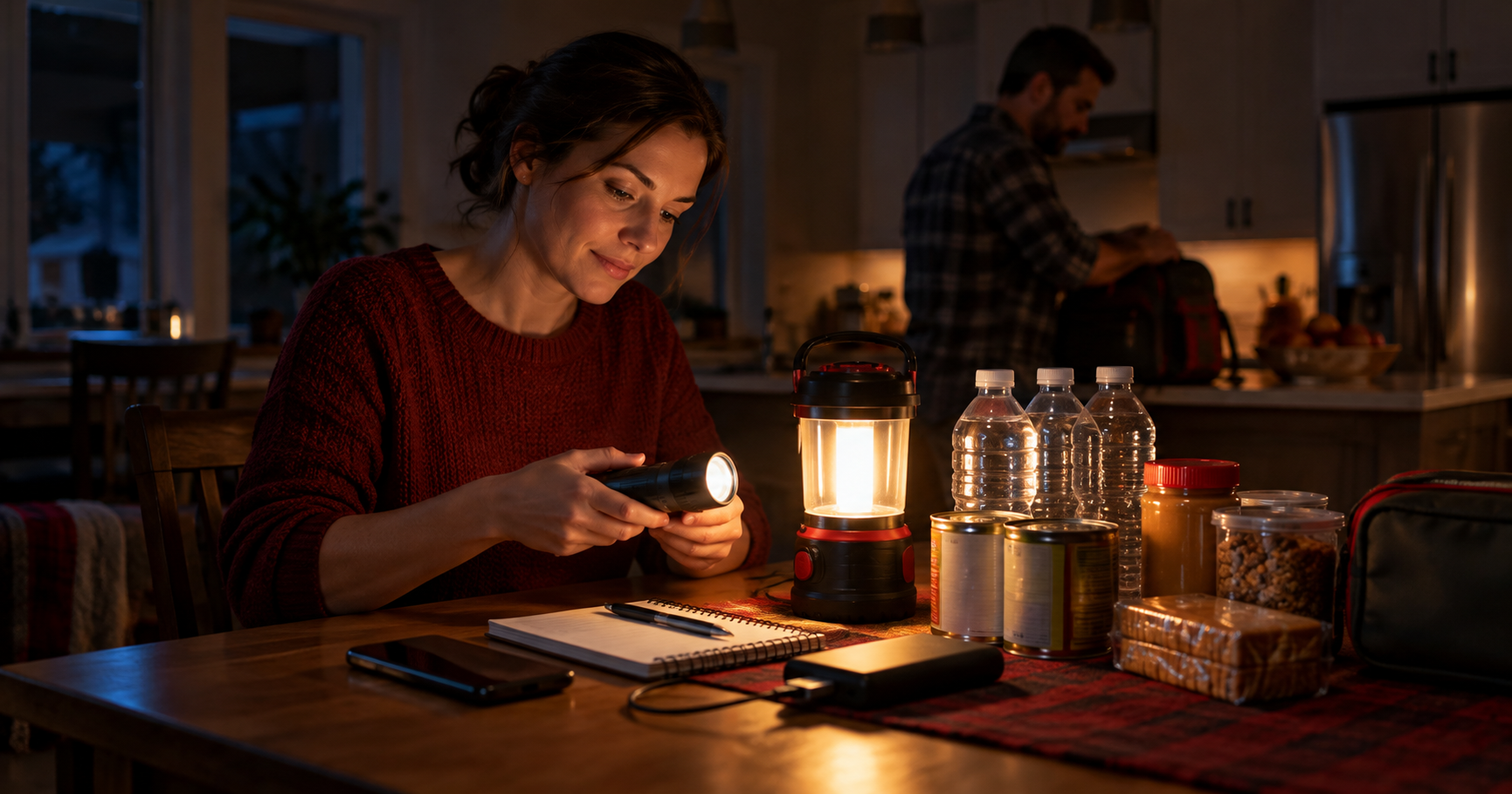

Power Outage Checklist: 12 Steps to Keep Your Household Safer
A power outage can interrupt more than the lights. Use this practical checklist to protect food, plan for medical needs, stay connected, and make safer decisions until electricity returns.
A power outage checklist can help you respond when electricity stops working at home. You may suddenly lose lighting, refrigeration, internet access, air conditioning, or heating. Even a short outage can disrupt important routines.
The first goal is not to do everything. It is to address immediate danger, protect essential supplies, and decide what needs attention next.
You do not need an expensive emergency kit to begin. A flashlight, a charged phone, a few important phone numbers, and a simple household plan can already help.
This guide covers 12 practical steps for the first hours of an outage. It also explains when to seek help and where to find reliable safety information.
Three Priorities When the Lights Go Out
Before worrying about every appliance or household task, focus on these priorities.
Check Safety
Look for immediate hazards. Stay away from fallen electrical lines, smoke, or damaged equipment.
Protect Essentials
Keep the refrigerator closed. Locate a flashlight, medications, and your phone.
Get Reliable Updates
Contact your utility through a verified number or website. Follow official local advisories.
Power Outage Checklist: The First 10 Minutes
Begin by checking your surroundings. A few safe actions now can prevent bigger problems later.
Check for Immediate Danger
Look for smoke, exposed wires, fallen power lines, or storm damage. Stay well away from damaged electrical equipment and anything touching a fallen line.
If there is a fire, a downed line near people, or another immediate threat, call emergency services. Do not attempt electrical repairs.
Confirm and Report the Outage
Check whether nearby homes also have lost power if you can do so safely. Then use your electric utility’s verified outage number or official website.
Record the estimated restoration time if one is available. Estimates may change, so check for updates rather than assuming electricity will return at a certain hour.
Find Battery-Powered Lighting
Use a flashlight, battery lantern, or another safe portable light. Keep one where people can find it without walking through a dark room.
Avoid candles when possible. An open flame can create a fire hazard, especially near children, pets, bedding, or flammable materials.
Protect Your Phone Battery
Turn on low-power mode. Reduce screen brightness and close apps you do not need. Send brief messages instead of making long calls when appropriate.
If you have a charged power bank, keep it available. Save battery power for important calls, updates, and emergencies.
Keep Food and Drinking Water Safe
Losing refrigeration can become a serious problem during a longer power outage. Protect what you can, but never risk illness to avoid wasting food.
Keep Refrigerator and Freezer Doors Closed
Avoid repeatedly checking the food. Opening the doors allows cold air to escape more quickly.
According to FoodSafety.gov , an unopened refrigerator generally keeps food cold for about four hours. A full freezer can hold a safe temperature for about 48 hours, or about 24 hours if it is half full.
Check Water and Food Advisories
Some emergencies can also affect drinking water or local water systems. Follow instructions from your water provider or public health department.
Keep shelf-stable food and safe drinking water available when possible. If officials issue a boil-water notice, follow their specific instructions. Do not assume the water is safe simply because a faucet still works.
Remember These Refrigerator and Freezer Times
These estimates assume the doors stay closed. Actual food safety depends on temperature, time, and the type of food.
Refrigerator
About four hours without power when kept closed.
Full Freezer
About 48 hours when kept closed.
Half-Full Freezer
About 24 hours when kept closed.
FoodSafety.gov advises discarding perishable refrigerated foods after four hours without power. Frozen food may be safe to refreeze or cook if it still contains ice crystals or is at 40°F (4°C) or below. Never taste food to decide whether it is safe.
Read the official power outage food safety charts for guidance on individual food items.
Keep People Safe and Connected
Food matters, but people come first. Some households need special arrangements when electricity is unavailable.
Make a Plan for Medical Needs
Some medical devices require electricity. Certain medicines also need refrigeration. If anyone in your home relies on these, follow the backup plan provided by their medical team.
Contact the device provider, clinician, or pharmacist for specific instructions. If essential medical equipment stops working and someone is in immediate danger, seek emergency medical help now.
Respond to Extreme Heat or Cold
Without air conditioning or heat, indoor temperatures can become unsafe. Pay attention to children, older adults, and people with medical conditions.
If the home becomes dangerously hot or cold, seek an appropriate safe location. Check official information about shelters or warming and cooling centers. Do not use a gas oven or stove to heat your home.
Prevent Carbon Monoxide Poisoning
Never run a portable generator, charcoal grill, or fuel-burning camp stove inside a home, garage, tent, or enclosed space. These devices can produce deadly carbon monoxide gas.
The CDC’s power outage safety guidance says generators belong outdoors, at least 20 feet from windows, doors, and vents. Use working carbon monoxide alarms.
If you suspect carbon monoxide exposure, move to fresh air and call emergency services immediately.
Check on Someone Who May Need Support
A neighbor may not have a working phone, transportation, spare batteries, or a safe place to stay. If it is safe, check on someone who may need assistance.
Offer something specific: help making a phone call, a flashlight, or information about a verified community resource. Respect privacy and do not enter unsafe buildings.
Never Bring a Generator or Grill Indoors
Carbon monoxide cannot be seen or smelled. A generator can produce dangerous fumes even when a garage door is open.
Keep portable generators outside, at least 20 feet away from windows, doors, and vents. Never use a gas oven for home heating.
If a carbon monoxide alarm sounds, move outdoors to fresh air and seek emergency assistance.
Prepare If the Power Outage Lasts Longer
A short outage may end quickly. However, a storm or utility problem may take much longer to repair. Prepare for that possibility early.
Prepare for an Overnight Outage
Gather drinking water, shelf-stable food, medicine, flashlights, batteries, blankets, and essential supplies. Keep important items together in an easy-to-find place.
If you might need to leave, plan a safe destination and transportation. Bring necessary medications, identification, and phone chargers. Follow evacuation instructions from local authorities.
Prepare for Power to Return
Turn off or unplug sensitive electronics when practical to reduce the risk of damage from power surges. Follow your utility’s guidance for restoring equipment.
When electricity returns, review food safety before eating refrigerated items. Reset clocks and essential devices, charge your phone, and replace supplies you used.
The official FEMA power outage preparedness sheet provides additional guidance for preparing, staying safe during an outage, and returning to normal afterward.
Your 12-Step Power Outage Checklist
Save these reminders somewhere accessible. A paper copy is helpful when phones or internet service are unavailable.
- Check for immediate electrical, fire, and storm hazards.
- Confirm the outage through your verified utility provider.
- Use flashlights or safe battery-powered lighting.
- Conserve phone power and keep backup charging ready.
- Keep refrigerator and freezer doors closed.
- Follow official drinking water and food safety advisories.
- Address essential medical devices and refrigerated medication needs.
- Find safe heating or cooling if indoor temperatures become dangerous.
- Keep generators and grills outdoors. Prevent carbon monoxide exposure.
- Check on neighbors when it is safe to do so.
- Gather supplies and identify a safe overnight alternative.
- Protect electronics, then check food safety once power returns.
Where to Look for Help After a Household Disruption
A power outage can create practical needs that remain after electricity returns. Food may spoil, transportation may be disrupted, and normal routines can take time to restore.
Start With Official Emergency Information
During an active emergency, rely first on your utility provider, local emergency management office, public health department, and emergency services. Do not assume a community organization is operating as an emergency shelter.
Ask for Practical Resource Direction
If you need prayer, compassionate support, or help identifying possible resources, visit The Gospel Rescue Mission’s Need Help page . The ministry responds as resources and availability allow. Its contact pathways are not a substitute for emergency services.
Find Food and Clothing Support
In the Cincinnati area, Landmark Bread of Life offers a way to request food boxes and clothing assistance. Those services are by appointment. Submit the request and wait for a scheduling callback.
Confirm current arrangements before traveling. Service availability can change, especially during a local emergency.
Find Community and Spiritual Support
Unbound Ministry shares information about Christian fellowship, small groups, prayer, and outreach in the Cincinnati area. Check its current schedule before planning a visit.
You can also send a prayer request through Lift My Prayer’s private contact form . Select Private Prayer Request if you do not want the request published on the public Prayer Wall.
Prayer and community care can accompany practical action. Neither replaces urgent medical, fire, or emergency assistance.
Clear Online Updates Help Communities During Disruptions
Churches, nonprofits, and community organizations may need to announce schedule changes, temporary closures, or alternate contact methods during a local outage.
A useful update should answer a few basic questions. Is the location open? Is an event canceled? How can someone contact the team? When should visitors check again?
Digital announcements are helpful, but they should not be the only option. Phone trees, printed notices, and direct contact may be needed when internet service is unavailable.
Website Help for Christian Ministries
Intangible Treasures helps Christian churches and ministries improve websites, contact forms, event information, and communication tools. Free assistance is offered as time and resources allow.
Ministry leaders can explain their needs through the Intangible Treasures Free Help form .
Technical Website Support for Organizations
BuildRightWeb offers paid WordPress development, technical maintenance, website improvements, and workflow services.
These tools can help organizations maintain accurate online information. However, emergency alerts should still come from appropriate official authorities and verified providers.
Frequently Asked Questions About Power Outages
How long will food stay safe in my refrigerator?
An unopened refrigerator generally keeps food cold for about four hours. Discard perishable refrigerated foods after four hours without power. Consult official food safety charts when deciding which items to keep.
Can I use a gas stove to heat my home?
No. A gas stove or oven is not a safe substitute for home heating. It can create carbon monoxide and fire hazards. Find a safe heated location if indoor conditions become dangerous.
What if someone needs electricity for medical equipment?
Follow the backup instructions from the medical equipment provider and health care team. Plan alternatives before an outage whenever possible. Seek emergency care if an essential device stops working and someone is in danger.
Should I open the freezer to see if food is still frozen?
Avoid unnecessary openings during the outage. A closed freezer holds cold air longer. After power returns, assess food using temperature, ice crystals, and FoodSafety.gov guidance.
What can I do today to prepare for a future outage?
Locate a flashlight, charge a power bank, write down your utility’s outage number, gather important medical contacts, and discuss a safe meeting or temporary relocation plan with your household.
A Simple Plan Can Make a Difficult Day Safer
Nobody can prevent every power outage. But a little preparation can help you recognize the most urgent needs and respond with greater confidence.
Find safe lighting. Protect your food. Keep essential contacts available. Make arrangements for medical needs. And avoid dangerous shortcuts involving electricity or fuel-burning equipment.
When it is safe, check on a neighbor. A brief phone call or practical offer of support can make a real difference.
Preparation is not about having every possible supply. It is about knowing what matters, making a reasonable plan, and taking the next safe step.
Safety reminder: This guide provides general information. Always follow local emergency advisories, utility instructions, and medical guidance. If someone is in immediate danger, call emergency services, such as 911 in the U.S.