
Outreach Ministry Space: Why Parking, Welcome, and Practical Flow Matter
An outreach ministry space can support prayer, practical care, dignity, volunteer service, and clear next steps when the environment is prepared with purpose.
Outreach ministry space matters because the physical environment can either make care easier or create another barrier. A person may already arrive carrying stress, uncertainty, or a practical need.
Therefore, a ministry location should help people understand where to go, where to park, who to speak with, and what happens next. Clear surroundings can make a first visit feel less overwhelming.
The Gospel Rescue Mission seeks to connect prayer, practical care, resource direction, outreach, and Gospel hope. Because of that, the space supporting the mission should help those parts work together naturally.
Outreach ministry space should make the next step clear.
People should not have to solve a puzzle before they receive care. A clear entrance, visible parking, simple signs, and an obvious place to begin can help reduce confusion.
In addition, first-time visitors may not know what kind of support is available. A calm welcome allows someone to ask a question before deciding what they need.
Online, TGRM follows the same idea through the Need Help page and Resources page. A physical location can carry that same clarity into the real-world experience.
Easy Arrival
Parking, entrances, and directions should help people arrive without unnecessary confusion.
Welcoming Flow
Guests should be able to understand where to begin, ask questions, and receive direction.
Practical Function
Volunteers need enough room for supplies, conversations, prayer, preparation, and follow-up.
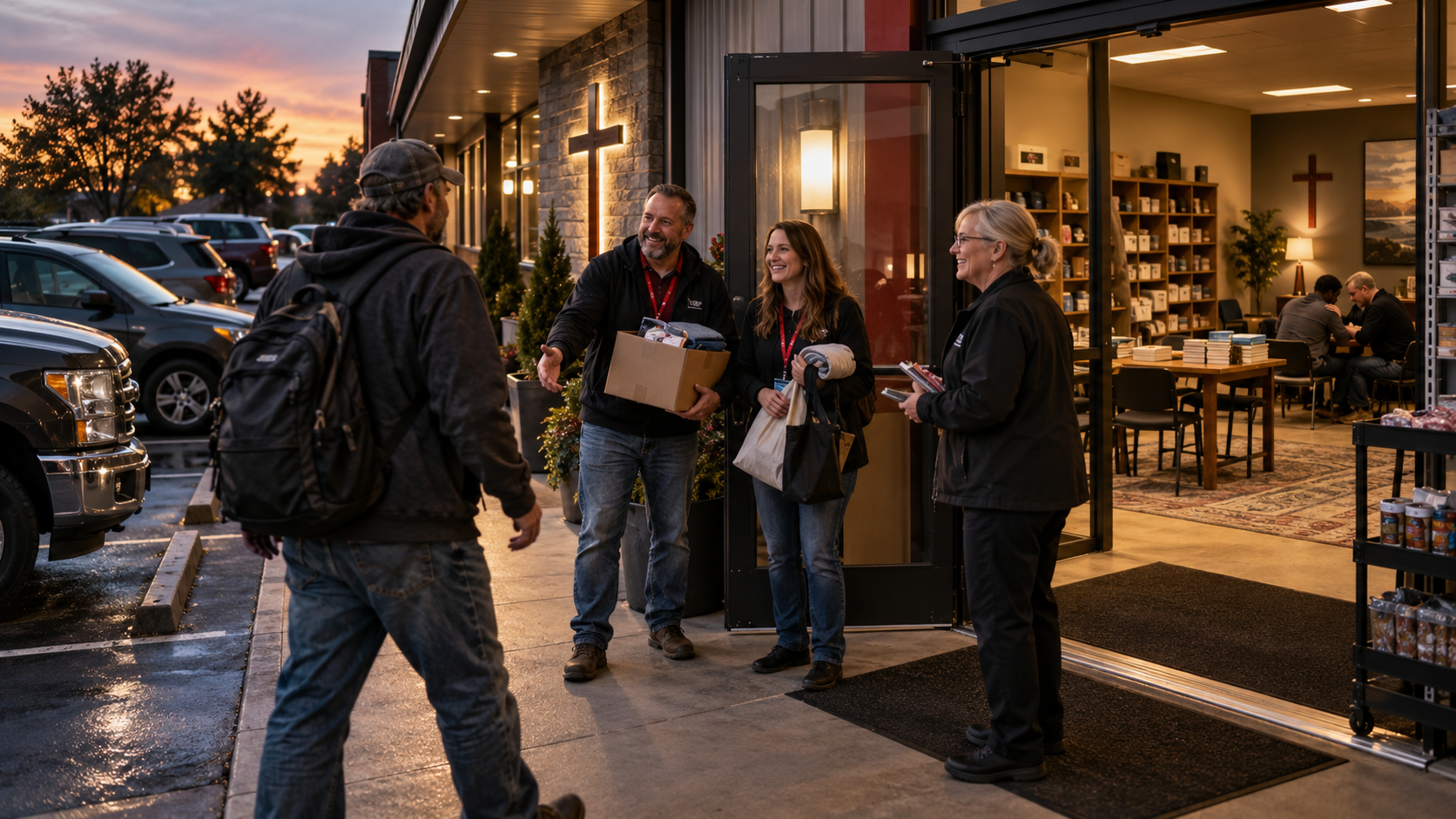
Parking can become part of ministry hospitality.
Parking may seem like a small operational detail. However, it can strongly affect whether someone feels comfortable arriving at an unfamiliar ministry location.
For example, volunteers may bring supplies, partner churches may arrive together, and visitors may need a simple route from their vehicle to the entrance.
As a result, useful parking can support events, outreach preparation, volunteer coordination, and everyday ministry activity without adding unnecessary stress.
The environment should quietly communicate, “You are welcome here.”
Gospel-centered hospitality does not require an elaborate building. Instead, it requires thoughtful preparation, clear direction, dignity, and people who are ready to care.
When those pieces come together, a ministry space can become a steady starting point for prayer, conversation, practical support, and hope.
A welcoming entrance can lower uncertainty.
Someone asking for help may already feel exposed or unsure. Because of that, the first few moments matter.
A volunteer who greets people calmly can explain what is available and listen before making assumptions. Meanwhile, organized signs or clearly marked areas can make the building easier to understand.
Ultimately, good hospitality is not about making a space look impressive. It is about helping people feel received with respect.
Prayer does not require a complicated room.
A ministry may have a dedicated prayer area, but prayer can also happen in a quiet corner, around a table, or during a caring conversation.
Still, the environment should allow prayer to happen respectfully. When possible, a quieter area can give people room to share without feeling like everyone nearby is listening.
In addition, visitors can continue that prayer connection online through Lift My Prayer.
Privacy supports dignity.
Not every conversation belongs in a crowded room. Someone may need to discuss housing, family concerns, resource needs, prayer, or a difficult personal situation.
Therefore, even a small outreach location benefits from having a place for quieter conversations. It does not have to be elaborate. Instead, it simply needs to respect the person speaking.
When dignity shapes the environment, practical care becomes more personal and thoughtful.
Storage helps practical outreach stay organized.
Outreach often requires supplies, printed information, care items, event materials, tables, signs, or volunteer equipment. Without organization, those resources can quickly overwhelm a small space.
For that reason, useful storage can support consistency. Volunteers can locate what they need, prepare efficiently, and return materials to a clear place afterward.
Where food or clothing direction is needed near Cincinnati, Landmark Bread of Life remains a relevant practical-care connection.
Volunteer flow should be simple.
Volunteers serve better when responsibilities are understandable. For instance, one person may welcome visitors while another prepares supplies or helps with follow-up.
Likewise, churches and small groups may need space to gather before an outreach activity. Clear roles and simple movement through the building can prevent confusion.
Churches, volunteers, and supporters who want to connect with TGRM can begin through the Partner page.
A ministry space should connect people, not isolate the work.
One location does not need to provide every service. In fact, strong ministry often depends on knowing when another resource can better serve a particular need.
For example, Unbound Ministry represents outreach that moves toward people in difficult places rather than waiting for everyone to enter a building.
As a result, a TGRM location can function as one part of a wider network of prayer, outreach, practical help, and trusted next steps.
Digital pathways should support the physical location.
A ministry building and a ministry website should work together. Before visiting, people may look for help information, contact details, directions, prayer support, or upcoming outreach opportunities.
Afterward, they may want to stay connected. Therefore, pages such as TGRM Updates and Contact can support continued communication.
Christian ministries that need practical digital assistance can also explore Intangible Treasures. For professional WordPress and website systems, BuildRightWeb provides another relevant digital pathway.
Accessibility is part of thinking about the person first.
Ministry planning should consider the different people who may arrive. Some visitors may move slowly, have mobility limitations, carry supplies, or simply need a clear path through the space.
Consequently, entrances, walkways, restrooms, seating, and gathering areas deserve attention before a location becomes busy.
Thoughtful access supports the larger goal: helping people receive care without creating another obstacle.
Consistency matters more than complexity.
A useful outreach location does not need every feature on the first day. Instead, it needs a clear purpose and enough structure to serve people faithfully.
Over time, the ministry can learn what works, what visitors need, and where volunteers need better systems. Then the environment can improve without losing the mission behind it.
Most importantly, the building should serve the outreach. The outreach should never become about the building itself.
Need prayer?
Share a prayer request and connect with faith-centered encouragement.
Share a Prayer RequestNeed help?
Start with prayer, resource direction, practical support, and clear next steps.
Find Your Next StepWant to serve?
Churches, volunteers, families, and supporters can connect with the mission.
Partner With TGRMHave a question?
Reach out to TGRM for questions about prayer, outreach, support, or connection.
Contact TGRMA good outreach space helps people move from arrival to connection with dignity.
Parking, organization, privacy, prayer, storage, volunteer flow, and digital communication may look like practical details. Together, however, they can make ministry easier to approach and easier to sustain.
When the space supports the mission instead of distracting from it, TGRM can stay focused on what matters most: listening, serving, praying, connecting people with help, and pointing people toward hope in Jesus Christ.