
The Hospital Says You Can Leave. But Where Can You Heal?
The surgery is over. The hospital stay is ending. But what if you have nowhere safe to rest, take medication, or recover?
Being ready to leave the hospital does not always mean recovery is complete. Learn what medical respite after hospital discharge means and seven important questions to ask.
Explore the seven questions ↓Leaving the Hospital Is Not Always the End of Recovery
Imagine spending several days in a hospital after an illness, injury, or surgery. Your medical team determines that you no longer need hospital-level care.
But you still need medication. You may need wound care or follow-up appointments. You might have difficulty walking or completing everyday activities.
Now imagine that you do not have a stable home to return to.
Where will you rest? How will you store medication? Who will help you understand your instructions? And what happens if recovery becomes more difficult?
These are practical questions worth discussing before discharge. The Agency for Healthcare Research and Quality emphasizes the importance of planning medications, warning signs, follow-up care, and daily needs as patients prepare to leave the hospital.
This guide is for people in the United States. It provides general information and does not replace medical advice or a clinician’s assessment.
Medical Respite, Emergency Shelter, and Hospital Care Are Not the Same
Knowing the differences can help you ask for the appropriate type of assistance.
Hospital Care
Hospital services address medical conditions that require the level of monitoring or treatment provided by a hospital.
A medical team determines whether hospital-level care remains necessary.
Medical Respite
Provides a short-term recovery setting for eligible individuals experiencing homelessness who need more support than an ordinary shelter can provide.
Clinical needs and program eligibility must be assessed before admission.
Emergency Shelter
Primarily provides temporary housing and related support. An ordinary shelter may not have the staffing, equipment, or services needed for medical recovery.
Confirm whether a shelter can safely accommodate the person’s actual care needs.
Seven Questions to Ask Before Hospital Discharge
These questions can help you participate in discharge planning and identify important gaps before leaving the hospital.
Where Can I Recover Safely?
Explain your actual housing situation. If you do not have an accessible or appropriate place to rest, make that clear to your care team.
Ask: “Can a discharge planner review the recovery setting I will need?”
Would Medical Respite Be Appropriate?
Ask whether your condition and personal circumstances make medical respite worth considering.
Ask: “Is there a medical respite program that may be appropriate for me, and can the team check its referral process?”
What Medication Will I Need?
Review every prescribed medication, where it can be filled, how it should be taken, and whether costs or storage could cause a problem.
Ask: “Can we review my medication list and make a plan for getting each prescription?”
What Care Must Continue?
You may require dressing changes, therapy, mobility support, medical equipment, or other follow-up services. Ask what is medically necessary.
Ask: “Who will provide or coordinate the care I still need after discharge?”
When Is My Next Appointment?
Confirm the location, date, and contact number for follow-up care. If transportation may be difficult, tell the discharge team.
Ask: “Can we confirm my follow-up appointments and discuss how I can get there?”
Which Warning Signs Require Help?
Ask your clinical team what symptoms to watch for and when to call the doctor, seek urgent care, or call emergency services.
Ask: “What changes should I watch for, and whom should I call if they happen?”
Who Can Help If the First Plan Falls Through?
Ask for the names and contact information of the people or agencies responsible for any planned follow-up services.
Ask: “If my placement, transportation, or follow-up arrangement changes, who should I contact?”
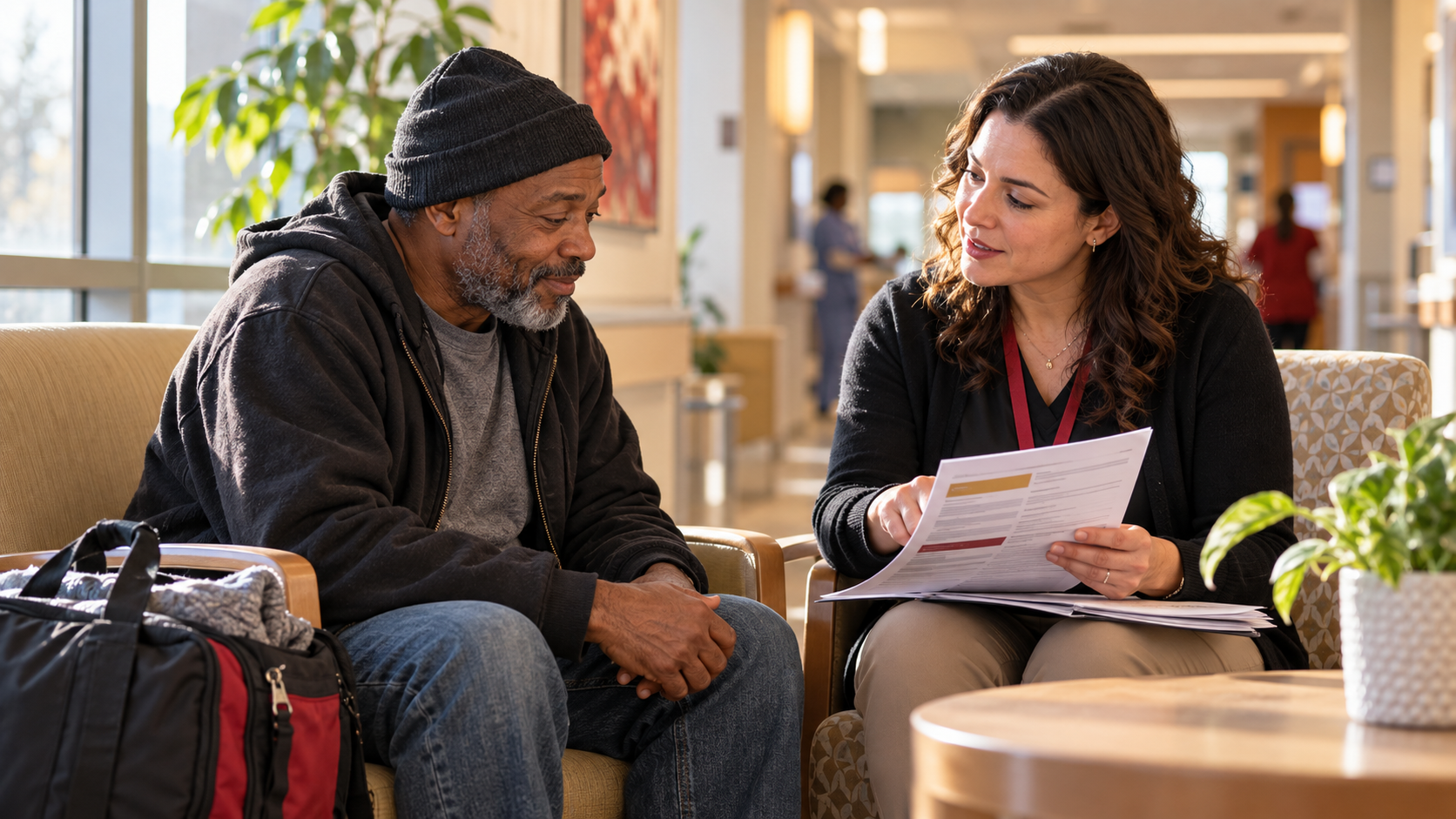
What Can You Say to a Hospital Social Worker?
You do not have to understand every medical term to explain what concerns you.
If You Are the Patient
“I understand that I may be ready to leave the hospital. But I do not have a safe or suitable place to recover from my condition. I am concerned about following my care plan. Can I speak with a discharge planner or hospital social worker about appropriate options?”
If You Are Helping Someone Else
“I’m helping someone who may be leaving the hospital without stable housing. Can the patient discuss medical respite, follow-up services, and discharge planning with the care team? What information do you need to assess appropriate options?”
When possible, obtain the patient’s permission before sharing their private medical details. If you are uncertain about a decision, ask the hospital team to explain the risks, alternatives, and next steps.
Discharge-planning requirements can vary depending on inpatient or outpatient status and other circumstances. Ask the hospital which procedures apply to your situation.
Cincinnati Medical Respite: Center for Respite Care
Greater Cincinnati has a dedicated program for eligible adults experiencing homelessness who need a medically appropriate recovery setting.
The Center for Respite Care offers a short-term medical recovery program. Its published services include nursing care, medical coordination, and case management for eligible individuals.
Center for Respite Care
Location:
1615 Republic Street
Cincinnati, Ohio 45202
Phone:
(513) 621-1868
Important: Admission is based on eligibility, clinical referral information, and program availability. This is not a general walk-in shelter.
Read the official referral requirements →The program publishes criteria concerning homelessness, medical need, age, mobility, and independent daily functioning. Hospital or medical staff may need to submit clinical documentation.
Ask the hospital case manager whether this program may be appropriate and whether a referral can be explored.
Outside Cincinnati, the National Medical Respite Care Directory can help identify potential programs. Listings are not a guarantee of current capacity or eligibility.
What If You Have Already Left the Hospital?
If you have already been discharged, you can still take steps to clarify your care plan and find appropriate support.
Contact Your Hospital Care Team
Use the contact information on your discharge paperwork and explain the barrier you are facing. Ask how to reach an appropriate follow-up clinician or care coordinator.
Review Your Discharge Instructions
Check medications, appointments, recommended care, and warning signs. If you cannot follow part of the plan, tell your clinical team.
Ask About Community Health Services
Community health centers or Health Care for the Homeless providers may offer medical follow-up or appropriate referrals. Confirm current services directly.
Seek Emergency Help When Needed
If you develop symptoms that your discharge instructions identify as an emergency, or face an immediate serious health threat, call 911 in the United States or seek emergency care.
Do not change prescribed medication, stop medically necessary care, or make decisions about treatment based solely on a community-resource article.
How TGRM and Other Community Resources Fit In
The Gospel Rescue Mission helps people find prayer, encouragement, practical resource direction, and community connections.
TGRM is not a hospital, licensed medical provider, emergency dispatch service, or guaranteed medical respite placement program.
The Gospel Rescue Mission
For nonurgent practical resource questions, visit TGRM’s Need Help page. For general shelter-intake information, see its emergency shelter guide .
Explore TGRM Help →Unbound Ministry
Its directory provides community contacts for emergency support, recovery resources, and local assistance. It is not a medical discharge service.
View Community Resources →Landmark Bread of Life
Near Cincinnati, Bread of Life provides a Monday community meal and appointment-based food and clothing assistance. These services are separate from medical respite care.
Read Assistance Instructions →Lift My Prayer
If spiritual encouragement would be helpful, its prayer wall offers an optional space to share a request. Never publish confidential health information without permission.
Visit the Prayer Wall →For Churches and Community Resource Teams
A useful ministry website should make clear which services it offers, which organizations provide medical care, and how people can find verified contact information without confusion.
Intangible Treasures helps Christian ministries with digital communication and resources. BuildRightWeb offers WordPress and website systems. These organizations provide digital services, not clinical discharge planning.
Medical Respite After Hospital Discharge: FAQs
What is medical respite after hospital discharge?
Medical respite provides a short-term recovery setting for eligible people experiencing homelessness who no longer need hospital-level care but still need a medically appropriate environment and support.
Is medical respite the same as an ordinary shelter?
No. Medical respite programs include recovery-related services that may not be available in a general emergency shelter. The exact care model varies by program.
Can someone apply without a hospital referral?
Referral requirements vary. Some programs accept referrals from hospitals or other medical providers. Cincinnati’s Center for Respite Care publishes clinical documentation requirements.
Is a respite bed guaranteed after hospital discharge?
No. Admission depends on medical appropriateness, program rules, referral review, and actual availability.
Does Medicare or Medicaid automatically cover respite?
No universal coverage guarantee applies. Funding and coverage arrangements vary by program, state, and insurance plan. Ask the discharge planner and program about applicable costs and coverage.
What if the person still needs hospital-level care?
A medical respite program does not replace medically necessary hospital services. The treating medical team must evaluate whether a different level of care is appropriate.
Can The Gospel Rescue Mission arrange medical respite?
TGRM provides nonurgent resource direction and prayer opportunities. Its website does not advertise direct medical respite admissions or guaranteed placement. Discuss clinical referrals with a qualified care team.
Sources and Important Health Notice
This article is for educational purposes. It does not diagnose a condition, determine discharge readiness, establish an individual legal entitlement, or guarantee admission to a medical respite program. Always confirm current requirements with the hospital and receiving provider.