
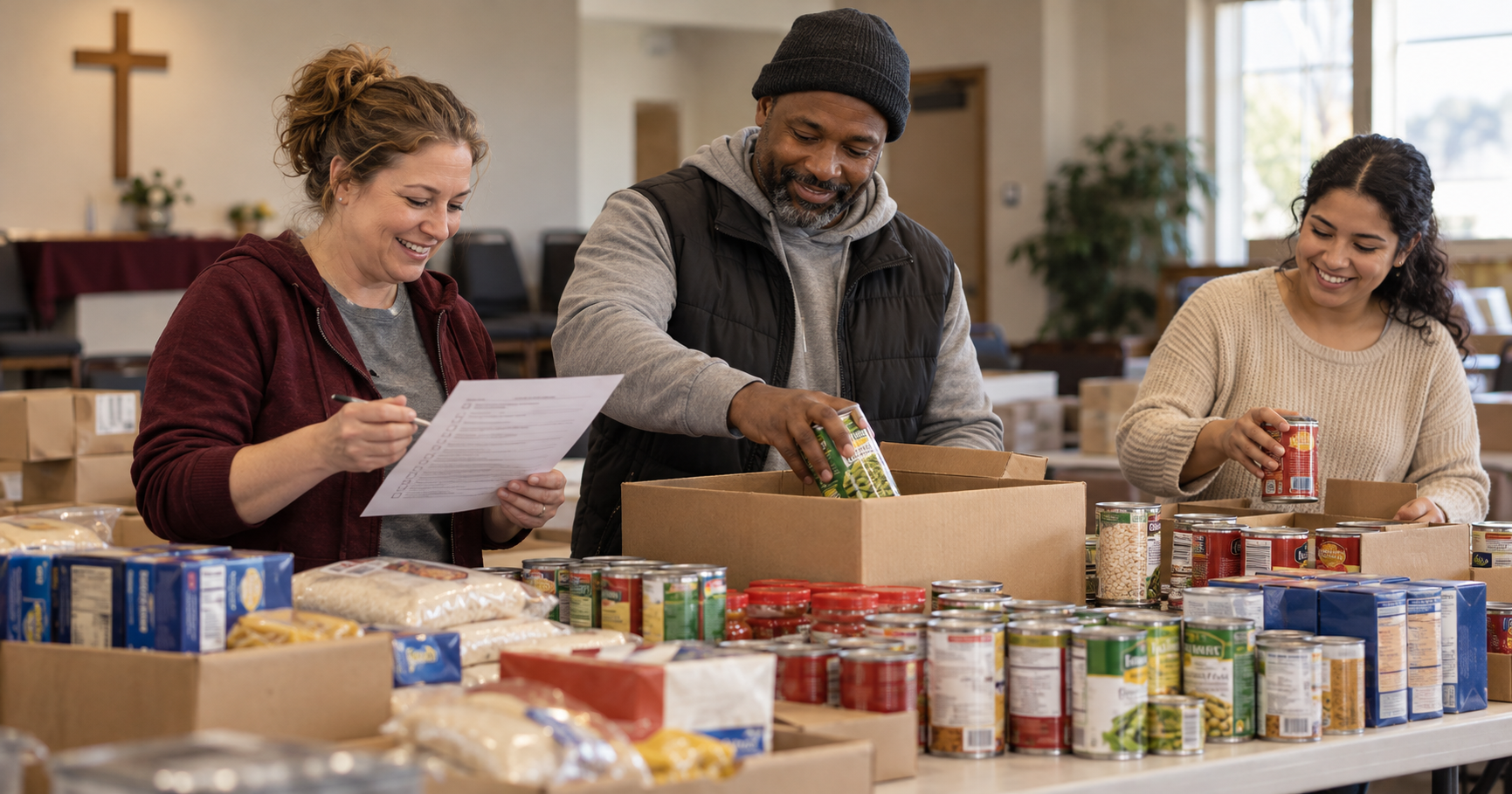

How to Organize a Food Drive: 12 Steps That Make a Difference
A thoughtful food drive can turn everyday generosity into practical help for neighbors. Learn how to find the right partner, collect useful items, involve your community, and deliver donations with care.
Learning how to organize a food drive is a practical way to help people facing food insecurity. You do not need to begin with a large event or a huge team. Sometimes, a small group can make a meaningful contribution.
For example, a church, a neighborhood group, a workplace, or a family may want to collect groceries for a local food pantry. However, enthusiasm alone does not guarantee that the donations will be useful.
A pantry may need certain foods more than others. It may also have rules about packaging, expiration dates, drop-off appointments, and storage. Therefore, the best food drive starts with listening.
First, identify an organization that can receive the donations. Then, ask what it needs. After that, build a simple plan around its actual requirements.
This guide shares 12 steps for organizing a food drive responsibly. It includes a planning checklist, donation safety tips, a sample announcement, and ways to involve others without overlooking the dignity of the people being served.
How to Organize a Food Drive: Start With These Three Steps
First, a clear plan helps volunteers understand their tasks. In addition, it helps the receiving pantry prepare for your donations.
Choose a Receiving Food Pantry
First, find a local organization that distributes food to people who need it. You can start with a known food pantry or food bank.
Next, contact the organization through its official website or published phone number. Explain that you would like to organize a collection.
Then, confirm that it currently accepts food drives. Do not announce the pantry as your donation partner before receiving its agreement.
Ask for an Approved Donation List
Next, ask which items are most useful right now. A pantry may need specific shelf-stable foods, easy-to-prepare meals, or items for particular households.
Also, ask about food allergies, packaging rules, and date requirements. The organization may have restrictions that differ from your expectations.
Finally, request a short list you can share with donors. This keeps the collection focused on real needs.
Set a Realistic Goal and Timeline
A food drive can last one afternoon, one weekend, or several weeks. Choose a schedule your team can manage.
For example, you might aim to fill a small number of clearly labeled boxes. However, do not promise a particular amount before you know what your volunteers can provide.
Set the collection start date, final donation deadline, and planned delivery day. Then, confirm those details with the receiving organization.
Steps 4–6: Collect Food People Can Actually Use
After choosing a partner, prepare the collection itself. These steps help people give clearly, confidently, and responsibly.
Share a Specific List of Needed Foods
A general request for “any canned food” may create confusion. Instead, share the pantry’s actual wish list.
For example, approved items might include canned vegetables, beans, rice, pasta, or shelf-stable meals. However, only list items the receiving organization has agreed to accept.
Also, explain whether the pantry prefers regular sizes, individual portions, or easy-open packaging.
Create a Clear Collection Point
Next, choose a safe and accessible collection area. It might be inside a church, workplace, school, or other approved location.
Then, place a clear sign above the donation box. Include the approved items and the collection deadline.
Keep donated food protected from weather, pests, and excessive heat. Do not block entrances, exits, or accessible walkways.
Offer a Clear Alternative to Food Donations
Some people want to help but cannot shop or deliver groceries. Therefore, ask your partner whether it accepts direct monetary donations.
If it does, share only its verified giving method. For example, you may direct donors to the organization’s official donation page.
Do not collect money into an individual’s account without proper authorization, records, and safeguards.
A Shorter Donation List Can Be More Helpful
Ten different suggestions can overwhelm potential donors. In contrast, three to five clearly requested items make participation easier. Ask the pantry what it needs and build your list from there.
Steps 7–9: Invite Your Community to Participate
A food drive becomes easier when people understand the purpose and the next step. You do not need elaborate promotion. Clear information works better.
Write a Simple, Specific Invitation
First, explain who is organizing the food drive and which organization will receive the donations.
Next, state what to bring, where to bring it, and when the collection closes.
Finally, make the message easy to share. One useful announcement can work for a church bulletin, social media post, group message, or flyer.
Give Volunteers Clear Roles
Next, ask a few people to help with specific tasks. For example, one person can monitor the collection area. Another can answer questions.
A third volunteer might help count or transport items. However, each task should match the person’s availability and ability.
Keep expectations reasonable. A small team with clear roles is often more useful than a larger team without a plan.
Share One Helpful Progress Update
During the collection, remind people of the approved items and final deadline. A short update can renew interest.
For example, you might say, “We have one week left to collect the pantry’s requested shelf-stable foods.”
Thank people for participating, but avoid pressuring anyone who cannot give. Generosity should be invited, not demanded.
Steps 10–12: Deliver Donations and Follow Through
Collection is only part of the project. Therefore, the final steps help ensure that donations reach the intended organization in a useful condition.
Review the Items Before Packing
First, check the donations against the pantry’s approved list. Remove items it cannot accept.
Next, look for opened packages, leaks, serious container damage, or other obvious concerns. Follow the partner’s date rules.
Do not taste questionable food or guess whether it is safe. Ask the receiving organization when an item is uncertain.
Schedule the Delivery Before Transporting Food
Next, confirm the drop-off address, date, and time. Some pantries only accept donations during certain hours.
Also, ask whether items should be sorted, boxed, or labeled before arrival.
Arrange safe transportation and enough help to move the boxes. Do not leave donations outside a closed building.
Thank Participants and Share the Outcome
Finally, thank everyone who contributed food, time, transportation, or other support.
If the pantry agrees, share a simple update about the items delivered. Be accurate about quantities and avoid claiming outcomes you cannot verify.
Then, ask whether continued support would help. A one-time drive may become the start of a thoughtful partnership.
Your Simple Food Drive Planning Checklist
Use this checklist before announcing your drive. It can help you identify missing details early.
- Confirm the food pantry or receiving organization.
- Get approval to collect donations for that organization.
- Request its current approved donation list.
- Confirm items it cannot accept.
- Choose the collection start and end dates.
- Confirm the collection point and permission to use it.
- Assign volunteers to simple tasks.
- Prepare clear public instructions for donors.
- Arrange a safe, approved storage area.
- Schedule donation delivery.
- Review and organize the collected items.
- Thank participants and follow up with the pantry.
If you cannot complete an important item yet, adjust your plan before beginning collection. A smaller, well-organized drive is better than an unclear one.
Sample Food Drive Announcement for Churches and Community Groups
Once the receiving organization has approved your plan, you can adapt the following message for a flyer or Facebook post.
Help Us Stock the Shelves
We’re organizing a community food drive to support [Confirmed Food Pantry Name].
Together, we can provide practical support by collecting the items this organization has requested.
Requested items: [Insert approved donation list]
Collection dates: [Start date] through [End date]
Drop-off location: [Confirmed location and hours]
Please bring unopened items that meet the pantry’s current donation requirements.
Every contribution is appreciated. Thank you for helping us serve our neighbors with care.
Replace every bracketed field with confirmed details. Do not publish the announcement until the receiving organization agrees to the collection.
If You Could Donate Three Pantry Staples, What Would You Choose?
Think about foods that are practical, easy to prepare, and useful to different households. What would be on your list?
Next, share your ideas with family, friends, or your community group. Then, compare those suggestions with an actual food pantry’s current donation list.
You may discover that the most useful gift is not always the item people think of first.
Where to Find Food Drive Partners and Community Support
A food drive works best when the right people and organizations connect. However, not every group has the same role.
For example, some organizations provide food or practical help. Meanwhile, others offer volunteers, prayer, community connection, or communication support.
Start a TGRM Partnership Conversation
The Gospel Rescue Mission’s Partner page explains ways to help through volunteering, church partnerships, meal support, and resource drives. Individuals and groups can express interest in serving.
If you want to organize a food or supply drive connected to TGRM, contact the ministry first. Ask about current needs, approval, and delivery arrangements before collecting donations in its name.
Support Food and Clothing Programs
In the Cincinnati area, Landmark Bread of Life provides community food and clothing support. If your group hopes to help, contact its team about current donation needs and accepted arrangements.
If you or someone you know needs food or clothing assistance, visit Landmark Bread of Life’s Get Help page . Food boxes and clothing are available by appointment after the team responds.
You can also use TGRM’s Need Help page for prayer and possible practical resource direction.
Community Connections and Prayer Support
Connect With Faith-Based Community Outreach
Unbound Ministry shares its work with people facing addiction, trauma, and difficult life circumstances. Its faith-centered outreach offers another example of Christians serving communities.
If you want prayer for a community project or a household need, visit Lift My Prayer and select Private Prayer Request. Avoid sharing confidential details about anyone receiving assistance.
Help Volunteers Find Clear Information Online
A food drive announcement should be easy to read, especially on a phone. Clear dates, accepted items, contact options, and directions reduce confusion for donors.
For churches and Christian ministries, Intangible Treasures provides ministry-focused website, flyer, event, and digital communication help, free as capacity allows.
For businesses that need professional WordPress pages, donation-campaign presentation, or technical website systems, BuildRightWeb offers paid web development and related digital services.
These organizations serve different purposes. Website-service providers are not food banks. Always confirm whether a pantry or ministry is currently able to accept your proposed donations.
How to Organize a Food Drive: Frequently Asked Questions
How do I organize a food drive for the first time?
First, contact a receiving food pantry and get approval. Then, ask for its current donation list, set dates, invite volunteers, and arrange delivery. Keep the first drive small enough to manage well.
What foods are best to donate?
The best foods are those your receiving pantry currently requests. Many organizations accept shelf-stable groceries, but specific rules vary. Therefore, use the pantry’s approved list.
Can I donate food past its date?
Do not assume the answer is yes. Food banks and pantries have their own date and condition requirements. Ask the organization directly and follow its policies.
More Food Drive Questions Answered
Is it better to donate money or groceries?
It depends on the receiving organization. Some prefer certain groceries. Others may recommend direct financial support to buy needed items. Ask before choosing.
Can a small church organize a food drive?
Yes. A small church or community group can organize a manageable collection. First, find an approved partner. Then, focus on its needs rather than the size of the collection.
Should we take pictures of recipients?
Do not assume that photos are necessary. Protect people’s privacy and dignity. If images are considered, follow the receiving organization’s consent and safeguarding policies.
Can I organize a drive for TGRM?
You can start by contacting The Gospel Rescue Mission through its partnership page . Ask what support is useful and whether a food or supply collection can be arranged. Do not use the ministry’s name for an unapproved drive.
Start Small. Ask First. Serve With Purpose.
You do not need an enormous donation goal to begin helping your community. You need a real need, a willing group, and a responsible plan.
Begin by asking a local pantry what it needs most. Then, invite others to contribute what they can. Finally, deliver the donations with care and gratitude.
At The Gospel Rescue Mission, we believe faith and compassion should lead to practical care. A well-organized food drive is one way a community can put that commitment into action.