
How to Do a Prayer Walk: A Practical Guide for Churches and Community Outreach Teams
A Christian prayer walk is not about making a neighborhood your project. It is about slowing down, paying attention, praying with compassion, and becoming more aware of the people and needs already present around you.
What Is a Christian Prayer Walk?
If you are wondering how to do a prayer walk, start with something simple: walk through a community while intentionally praying for the people, homes, schools, businesses, churches, leaders, and needs you notice along the way.
Yet a meaningful prayer walk involves more than moving from one street to another. First, it creates space to listen. In addition, believers begin to notice what they might normally pass by. For example, a simple walk can reveal opportunities for compassion, conversation, practical help, and long-term Christian community outreach.
Jesus repeatedly noticed people others overlooked. Throughout His ministry, He saw crowds with compassion. At other times, Jesus stopped for individuals. Likewise, He listened to questions, met practical needs, spoke truth, and pointed people toward the Kingdom of God.
A prayer walk is not about walking through a neighborhood as outsiders who have arrived to fix it. It is about entering humbly, praying faithfully, listening carefully, and asking God to show you how to love the people who are already there.
That posture fits the heart of The Gospel Rescue Mission : prayer, practical care, compassionate presence, and hope in Jesus Christ.
Why Prayer Walking Can Change the Way You See a Community
It is easy to form opinions about a neighborhood from a distance. However, walking through it can change your perspective.
For example, you may notice a playground full of families, an elderly neighbor sitting alone, a small business trying to stay open, an empty building, a school, a church, people waiting for a bus, or someone who simply looks like they need encouragement.
None of those observations tell you someone’s whole story. Instead, they can remind you that communities are made of real people rather than statistics.
A community prayer walk can move prayer from something abstract to something personal. Instead of praying only, “God, help this city,” you begin noticing actual streets, families, workplaces, schools, churches, and neighbors.
Prayer becomes connected to presence.
How to Do a Prayer Walk Step by Step
You do not need an elaborate program to begin. A small group of faithful people can start with a clear purpose, respectful behavior, and a willingness to listen.
Begin With Prayer Before You Begin Walking
Gather briefly before entering the neighborhood. Ask God for wisdom, compassion, humility, discernment, and opportunities to encourage people without forcing conversations.
Learn Something About the Community First
Know where you are going. Understand major streets, public spaces, schools, churches, local resources, and any obvious safety or access considerations. Preparation helps your team walk with purpose.
Walk in Small, Respectful Groups
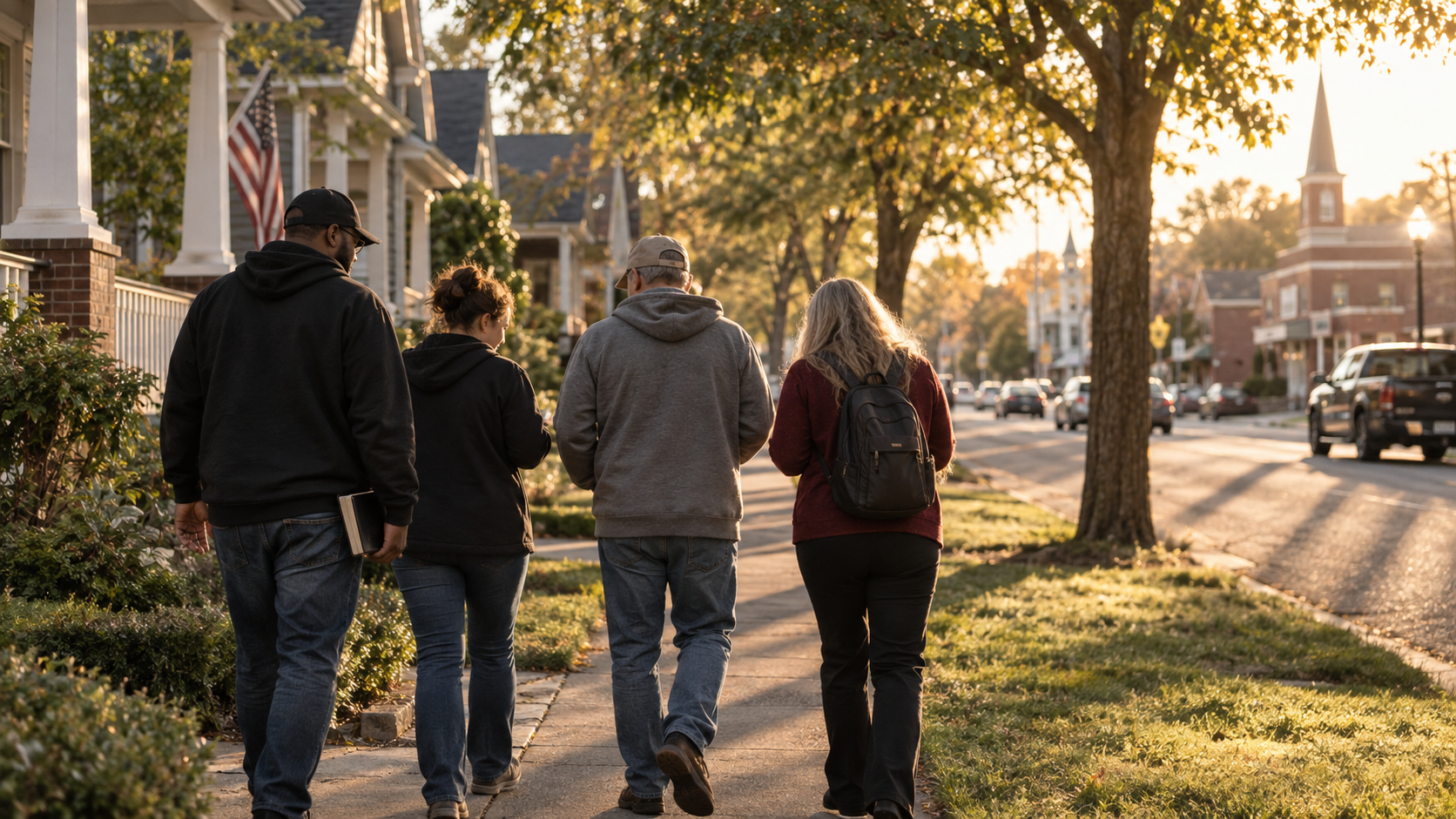
Two or three people can often move through a neighborhood more naturally than a large crowd. Stay aware of traffic, private property, businesses, and the everyday routines of residents.
Pray With Your Eyes Open
Notice what is around you. Pray for families, children, workers, local churches, first responders, business owners, community leaders, people experiencing hardship, and those carrying needs you cannot see.
Ask Before Praying Directly With Someone
If conversation opens naturally, keep it simple: “Is there anything we could pray about for you?” Respect the answer. Kindness does not require pressure.
Listen More Than You Speak
If someone shares part of their story, listen carefully. You do not need to solve every problem. Sometimes being treated with dignity and genuinely heard is meaningful in itself.
Be Ready With Real Next Steps
Prayer matters, but someone may also need food, clothing, recovery support, shelter direction, spiritual encouragement, or another practical connection. Know which resources you can responsibly share.
Return Instead of Treating It as a One-Time Event
One prayer walk can be meaningful. Consistent presence can build trust. When possible, keep praying, return to the community, support local ministries, and stay attentive to what God may be doing there.
What Should You Pray About During a Neighborhood Prayer Walk?
You do not need perfect words. Let Scripture, compassion, and what you observe guide your prayer.
Families and Homes
Pray for strong relationships, provision, protection, reconciliation, wisdom, and peace within homes.
People Who Feel Forgotten
Ask God to make His love known to people experiencing loneliness, homelessness, grief, addiction, fear, financial pressure, or hopelessness.
Schools and Young People
Pray for students, teachers, parents, staff, safety, wisdom, healthy relationships, and opportunities for young people to encounter hope.
Local Businesses and Workers
Ask for honest work, provision, wise leadership, healthy workplaces, and businesses that contribute positively to the surrounding community.
Churches and Ministries
Pray for biblical faithfulness, unity, wisdom, compassion, volunteers, resources, and courage to serve beyond the walls of a building.
Gospel Opportunities
Ask God to open natural opportunities for conversations about Jesus and give believers the wisdom to speak truth with grace and love.
A Good Prayer Walk Does Not Assume It Already Knows What People Need
One of the most important parts of learning how to do a prayer walk is learning not to make assumptions.
A person sitting outside may not need what you think they need. Likewise, a quiet neighborhood may carry struggles you cannot see. At the same time, a struggling family may have strengths, relationships, and wisdom you know nothing about.
Because of this, start with humility.
If residents speak with you, ask simple questions. Then, listen to what they care about. In addition, notice what brings life to the neighborhood as well as what appears broken.
Community outreach should never reduce people to their needs. Every person you meet carries a story, dignity, gifts, relationships, struggles, and value before God.
What Not to Do During a Community Prayer Walk
Good intentions still need wisdom. Protecting dignity matters just as much as showing up.
- Ask permission before photographing anyone in a vulnerable situation.
- Respect private property and enter only when you are invited.
- Never pressure someone to pray or participate in a spiritual conversation.
- Avoid promising money, housing, food, transportation, or other help you cannot provide.
- Keep personal stories private unless someone clearly gives permission to share them.
- Respond graciously when someone disagrees with you instead of arguing.
- Protect people’s dignity rather than turning visible hardship into social media content.
- Remember that one visit does not mean you fully understand a community.
Respect builds trust. Pressure usually destroys it.
What Happens When Someone Needs More Than Prayer in That Moment?
Sometimes a conversation during a Christian prayer walk uncovers an immediate practical need.
For example, someone may need food. Another person may be looking for clothing, recovery support, encouragement, shelter direction, or simply a safe place to begin asking for help.
However, you do not have to personally solve every need. Instead, make the next step clearer.
Prayer, Support, and Resource Direction
People looking for prayer, practical support, or help identifying a next step can start with The Gospel Rescue Mission Need Help page .
Food, Clothing, and Prayer Near Cincinnati
For current help information related to meals, food, clothing, and prayer, visit Landmark Bread of Life .
Freedom, Healing, and Ongoing Support
Someone looking for Christ-centered support related to freedom, restoration, or ongoing ministry connection can learn more through Unbound Ministry .
Continue Praying Beyond the Walk
Prayer does not have to end when the walk ends. Visit Lift My Prayer to pray for others, share a prayer request, and stay connected to a wider Christian prayer community.
The Most Important Part May Be What Happens After the Prayer Walk
Afterward, when the group finishes walking, take a few minutes to talk about what everyone noticed.
For example, ask what needs came up repeatedly. Did someone request follow-up? Was there a local church, nonprofit, business, or community leader worth connecting with? Did your team notice a need that requires more research before responding?
Finally, separate what requires action from what simply needs continued prayer.
Simple Post-Walk Checklist
- Pray again for the people and needs your team encountered.
- Follow up only where someone invited follow-up.
- Protect names, stories, phone numbers, and private information.
- Verify resources before referring someone to them.
- Write down community needs without identifying vulnerable individuals.
- Decide whether and when your team should return.
- Thank volunteers and prayer partners.
- Look for opportunities to support ministries already serving the area.
Your Community Outreach Should Be Easy to Find After People Go Home
A person may meet your team during a prayer walk but wait until later to ask for help.
Because of this, churches and ministries should make basic information easy to find online. For example, a simple page can explain how to request prayer, where to get help, when the next outreach takes place, or how someone can volunteer.
Churches and Christian ministries that need help creating clearer websites, event pages, outreach graphics, forms, or practical digital tools can explore Intangible Treasures .
For professional commercial website, WordPress, WooCommerce, or custom development work, BuildRightWeb provides business-focused web and development services.
Technology should not replace presence. However, a clear website can make it easier for someone you met on the street to find the next step once they are ready.
A Neighborhood Prayer Walk Should Lead Toward Faithful Community Presence
The goal is not to complete a route and check outreach off a list.
Christian community outreach becomes more meaningful when people know that someone is willing to return.
Pray again. Learn names when relationships develop naturally. Support trustworthy local ministries. Bring volunteers when appropriate. Connect people to resources you have verified. Share the Gospel with humility and clarity when opportunities arise.
Most of all, remember that ministry is about people.
Questions About How to Do a Prayer Walk
What is a prayer walk?
A prayer walk is the practice of walking through a neighborhood, community, campus, or other area while intentionally praying for the people and places around you.
Do you have to pray out loud during a prayer walk?
No. Prayer can be quiet or spoken with your group. If you want to pray directly with another person, ask permission first and respect their answer.
How long should a community prayer walk last?
There is no required length. A focused 30- to 60-minute walk can be meaningful. Choose a route and duration that fit your team and the community.
What should we bring on a prayer walk?
Bring weather-appropriate clothing, water if needed, a phone for safety, verified resource information, and a simple way to record follow-up requests without exposing private information.
Can a small church organize a neighborhood prayer walk?
Yes. A prayer walk does not require a large team. Two or three people can pray intentionally, listen well, and begin building a faithful presence in a community.
Pray. Walk. Listen. Keep Showing Up.
The Gospel Rescue Mission exists to bring prayer, practical care, resource connection, dignity, and the hope of Jesus Christ into communities that need it. You can pray with the mission, serve, partner, or help someone find their next step.