
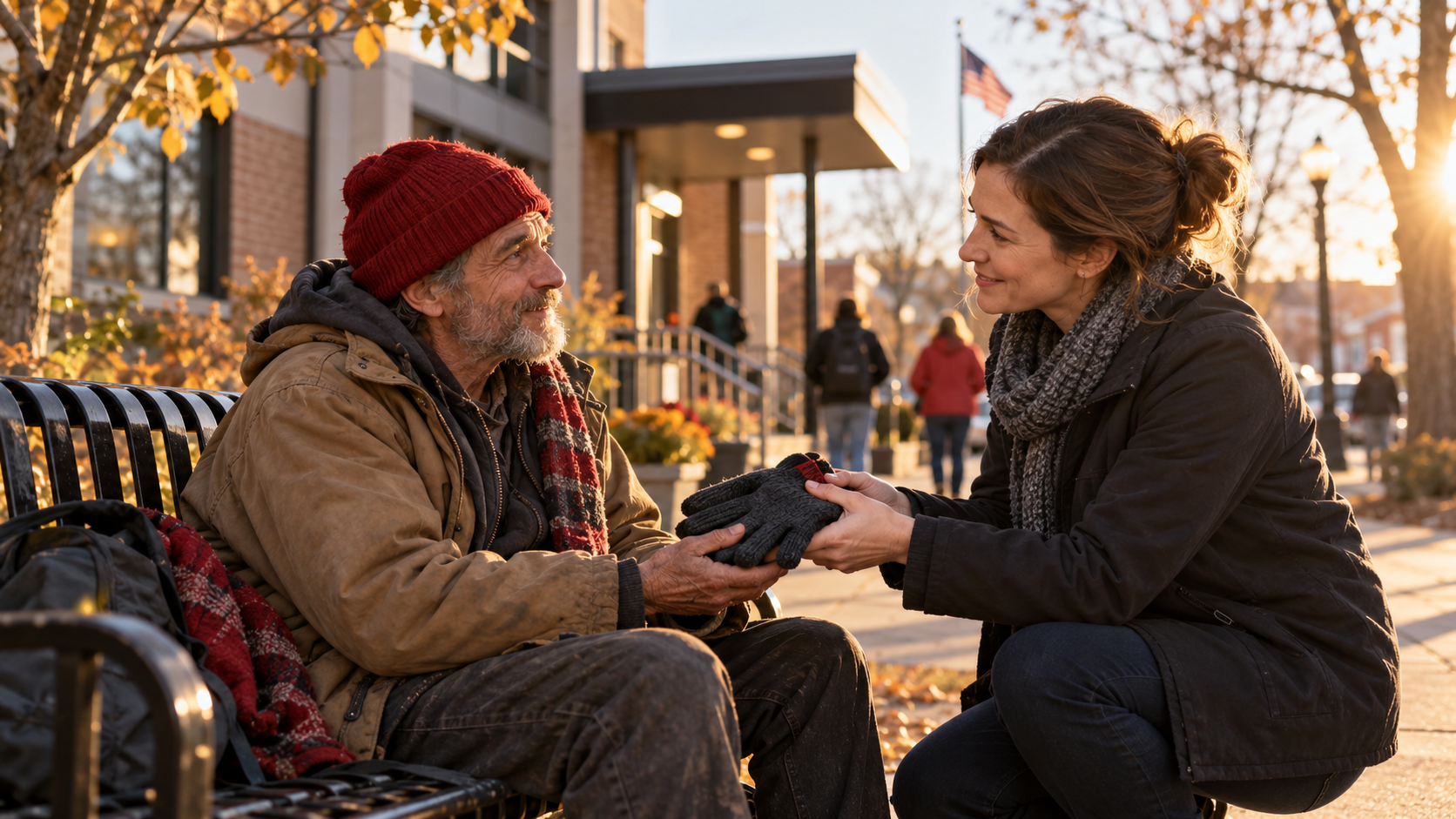

You See Someone Outside in the Cold. What Should You Do?
You notice someone sitting outside as the temperature drops. You want to help, but you don’t want to assume what they need—or make the situation harder.
Start with respect. Check for danger. Offer one useful next step. Here are seven practical ways to help someone outside in cold weather.
See the seven safe steps ↓Compassion Starts Before You Say a Word
Maybe you are leaving a grocery store, walking past a bus stop, or heading home from church. You notice someone outside in clothing that looks too light for the weather. You want to do the right thing. But what is the right thing?
Helping well means paying attention to safety, respecting someone’s choices, and offering what is genuinely useful. It does not mean assuming a stranger is unhoused, demanding a personal story, or recording a moment for social media.
Cold exposure can become dangerous even when it is not freezing. Wet clothes and wind make the situation worse. According to the CDC’s cold-weather guidance , hypothermia may occur in cool conditions when a person is wet and chilled.
Confusion, slurred speech, extreme drowsiness, or other signs of serious cold injury require urgent medical help.
Ask for local shelter or warming-center information. Confirm the place and its rules before anyone travels.
This U.S.-focused article offers general bystander guidance, not medical treatment instructions or a guarantee of shelter placement.
Seven Safe Ways to Help Someone Outside in Cold Weather
Use these steps as a guide, not a rigid script. In an emergency, contact local emergency services immediately instead of working through the list.
First, Check Whether It Is Safe to Approach
Look at traffic, lighting, weather, and your surroundings. Keep a respectful distance and avoid surprising or cornering someone. If approaching feels unsafe, you can still seek appropriate help from a safe location.
If a person appears unresponsive or seriously ill, call 911. Do not assume they are sleeping or intoxicated.
Begin With a Simple, Respectful Question
Try, “Hi, it’s getting cold. Would any help be useful right now?” Give the person time to respond. A polite offer is better than a speech or an interrogation.
They may want a warm drink, directions, dry gloves, or no help at all. Unless there is an immediate safety emergency, respect their response.
Listen Before Offering Anything
Ask what would make the next hour easier. A blanket might help one person, while someone else needs a reliable bus route or a place to make a call.
Do not ask why the person is outside, demand proof of hardship, or make assumptions about housing, health, or substance use.
Recognize When Warm Supplies Are Not Enough
Confusion, slurred speech, unusual sleepiness, or difficulty using the hands can be signs of hypothermia. Numb, pale, waxy skin may signal frostbite.
These conditions require medical attention. Call 911 when you suspect serious cold injury. Follow the dispatcher’s instructions rather than attempting improvised medical treatment.
Offer Practical Items Only If They Are Wanted
Clean dry socks, insulated gloves, a hat, or a weather-resistant layer may be useful. Ask before giving food or drink, especially if the person may be ill or have difficulty swallowing.
Never give an unconscious or impaired person something to eat or drink. Avoid giving medications, alcohol, or unsafe heating devices.
Find a Verified Place to Get Warm
Call 211, check the city or county website for cold-weather updates, or ask a known community service provider about local options. Some areas open warming centers during severe weather.
Confirm hours, accessibility, transportation, entry rules, and whether the service is active. A listing does not guarantee that a building is open or that a shelter has an available bed.
Help With the Next Step—Without Taking Over
With the person’s permission, you could help place a phone call, share a verified address, or write down the service hours. If no option works, ask the referral service for an alternate contact.
Give control back to the person wherever possible. A respectful conversation and one accurate next step are more useful than a promise you cannot keep.
Three Helpful Things to Say Instead of Making Assumptions
Your tone matters as much as the words. Keep the conversation calm, brief, and open to the other person’s choices.
Offer a Choice
“Would a dry pair of socks, a warm drink, or help finding somewhere indoors be useful?”
Offer to Check
“I can look up a nearby warming center or call 211 with you. Would you like that?”
Respect the Answer
“Okay. Thank you for talking with me. I hope you stay safe.”
If someone shows signs of a medical emergency, do not rely on their ability to evaluate the risk. Call emergency services for guidance.
A Small Cold-Weather Kit That Can Actually Be Useful
You do not need an expensive collection of supplies. If you choose to carry a few items, focus on clean, practical things and follow the recipient’s preferences.
- New, dry socks in a common adult size
- Warm gloves or mittens
- A clean knit hat
- A compact rain poncho or weather-resistant layer
- A simple printed card with verified local support numbers
- Sealed water or a snack, offered only when appropriate
- A pen and small paper for writing down directions
- A charged phone for contacting referral services
Do not leave supplies in a way that creates litter or an obstruction. Avoid photographing recipients or asking them to pose with items. If you are volunteering with an organized team, follow the team’s safety and supply policies.
Where to Find Warmth, Shelter Referrals, and Other Help
Cold-weather services change by location, conditions, and available capacity. A phone number can be more helpful than an unverified promise.
United Way 211
Ask for local warming-center information, emergency shelter referrals, and basic-needs assistance in your U.S. area.
Find help through 211 →HUD Find Shelter
Search for shelter organizations by location, then contact providers to confirm intake processes and current options.
Search shelter resources →Cincinnati-Area Referral
For Hamilton County, CAP is an established shelter intake contact at 513-381-7233. Confirm current hours and instructions.
Review CAP intake information →TGRM’s Shelter Guide
For someone seeking a place to sleep, TGRM’s Article #64 explains questions to ask and how to prepare for shelter intake.
Read the seven-step shelter guide →Respect and Privacy Are Part of Practical Care
Someone who is cold does not become a public story. Do not publish their location, appearance, or private details without meaningful permission. Never make a meal, coat, transportation assistance, or a basic referral conditional on listening to a message or accepting prayer.
Faith can guide the way we serve. At The Gospel Rescue Mission , prayer, practical compassion, and the hope of Jesus Christ are central. However, compassionate help should respect each person’s dignity and choice.
If a person welcomes prayer, keep it brief and centered on their request. If they do not, respect that answer and continue to treat them kindly.
Helping Someone Outside in Cold Weather: FAQs
Should I wake someone who appears to be sleeping outside?
If someone seems unresponsive, confused, or seriously unwell, call 911 and follow the dispatcher’s guidance. Do not shake or move them roughly. If there is no emergency, respect personal space and your own safety.
Should I hand out blankets or coats without asking?
Offer first. A dry coat or blanket may help, but not everyone can carry extra belongings. Let the person choose whenever it is safe to do so.
Can cold weather be dangerous above freezing?
Yes. The CDC explains that hypothermia may occur in cool temperatures when a person is wet and chilled. Wind and prolonged exposure can add to the risk.
What if every shelter says it is full?
Ask 211 or the local intake line for alternate referrals, warming-center information, or outreach contacts. Do not send someone to an unverified address or promise a bed.
Should I post a photo to raise awareness?
Avoid photographing a person receiving assistance without informed permission. You can share verified resource information instead, without identifying anyone.
Does TGRM operate a warming center?
TGRM’s published pages describe resource direction, prayer, and practical care. They do not establish that TGRM operates a warming center or guarantees overnight shelter. Use local emergency and shelter services for urgent needs.
Where TGRM and Related Ministries Can Help With Next Steps
Once immediate safety has been addressed, people may also need food, clothing, prayer, or another resource contact. These organizations have different roles. None should be presented as a cold-weather shelter unless it confirms that service.
The Gospel Rescue Mission
Explore prayer, practical care, and guidance toward community resources. For urgent medical needs, call 911 first.
See TGRM’s Need Help page →Unbound Ministry
Review its community directory for Cincinnati-area emergency contacts and support services.
Explore the resource directory →Landmark Bread of Life
Food boxes and clothing assistance require a request and scheduled callback. The Monday 5:30 PM meal follows a separate open-meal process.
Review food and clothing assistance →Lift My Prayer
People who want spiritual encouragement can share a prayer request; avoid posting sensitive personal information.
Visit the prayer wall →For Churches: Make Winter Help Easy to Find
A website that clearly lists verified winter hours, access rules, phone numbers, and updates can reduce confusion for people seeking help. Intangible Treasures provides digital support for churches and ministries, while BuildRightWeb offers professional WordPress and website systems. These organizations provide digital services, not emergency cold-weather shelter.
One Respectful Question Can Open the Door to Real Help
If you notice someone outside in cold weather, remember the order: check for emergency signs, ask what would help, and share a verified next step. A caring response does not require you to have every answer.
Want to support The Gospel Rescue Mission’s mission of prayer, practical care, and hope in Jesus Christ? Learn about opportunities to connect and serve.
Reliable Sources and an Important Safety Reminder
This general guide is based on official cold-weather health guidance and published community resource information. Services, hours, and weather conditions change. Confirm with local providers before traveling.
- CDC — Preventing Hypothermia
- National Weather Service — During Extremely Cold Weather
- United Way 211 — Local Resource Referrals
- HUD — Find Shelter
- Strategies to End Homelessness — Cincinnati Shelter Access
Safety notice: This information cannot diagnose a cold injury, dispatch help, verify current warming-center openings, or reserve a shelter bed. In the United States, call 911 for suspected hypothermia, a serious medical emergency, or immediate danger.