
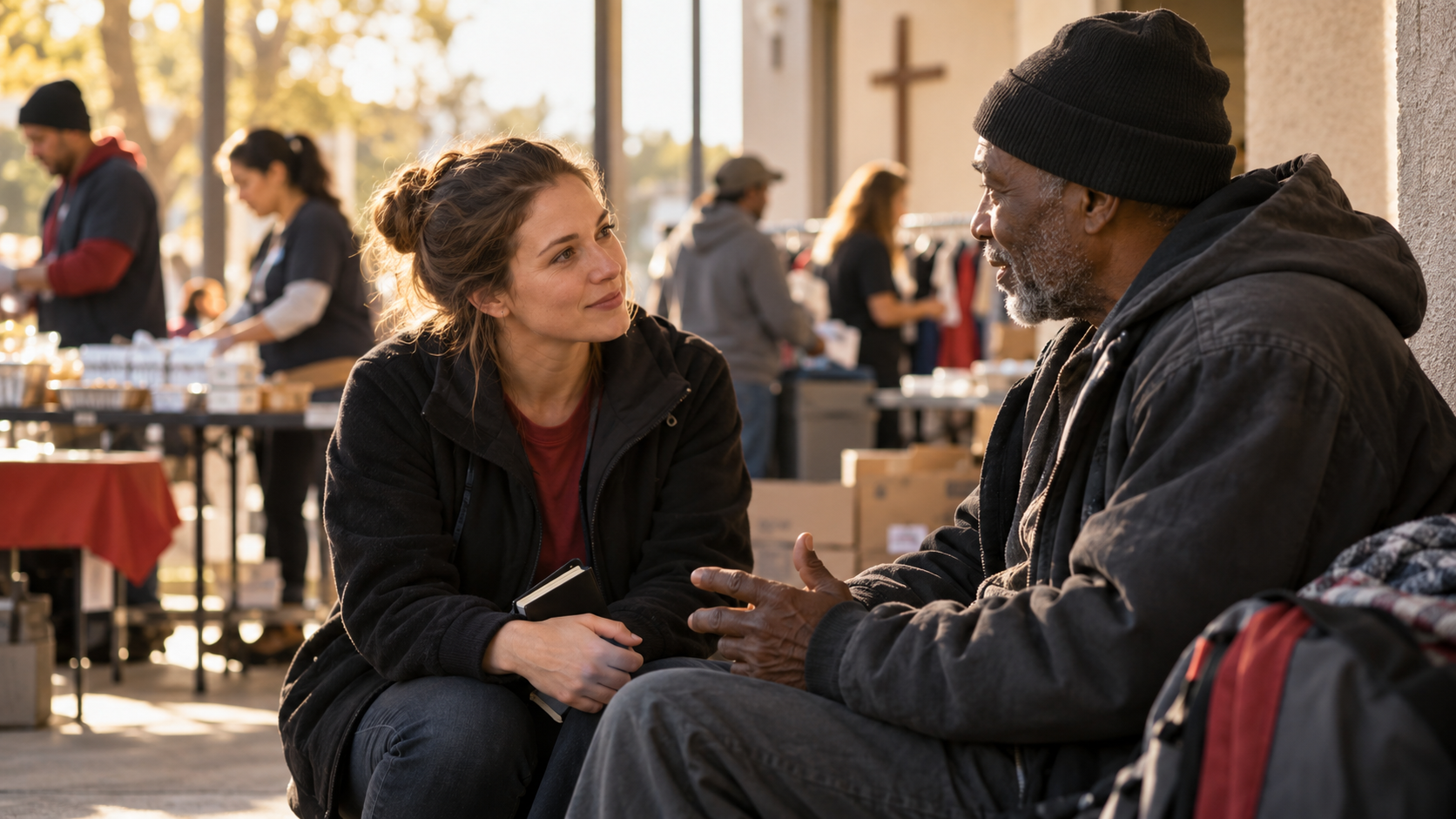

Christian Ministry Storytelling: How to Share Testimonies Without Exploiting the People You Serve
Christian ministry storytelling can show how God is working, encourage believers, and help others understand a mission. Yet every story belongs first to a real person whose dignity matters more than a post, photo, campaign, or moment of attention.
A Powerful Ministry Story Should Never Cost Someone Their Dignity.
A volunteer takes a meaningful photo. Someone shares an emotional testimony. A family receives practical help. An outreach team sees a moment that could encourage supporters and show the impact of ministry.
Those stories matter. However, the way they are shared matters too.
Healthy Christian ministry storytelling does more than create inspiring content. It tells the truth, protects people, respects consent, and remembers that a person is never a marketing asset.
The Gospel Rescue Mission centers its public mission on prayer, practical care, resource connection, dignity, and hope in Jesus Christ. Storytelling should reflect those same values.
If a Story Helps the Ministry but Harms the Person, It Is Not a Good Ministry Story.
The purpose of a testimony is not to prove that a ministry is impressive. Instead, it should honor what God is doing while treating the person involved with care.
A ministry can communicate impact without exposing every detail of someone’s hardest season.
Why Christian Ministry Storytelling Still Matters.
Stories help people understand what statistics cannot always explain. A number may show how many meals were served, while a testimony can show why one conversation, prayer, or act of care mattered.
In addition, stories can encourage volunteers, help supporters understand ministry needs, and remind churches that outreach involves real people.
Testimonies can also point attention toward Jesus rather than toward the organization itself.
Because of this, ministries do not need to stop telling stories. They need to tell them responsibly.
Ask Before Sharing
Permission should come before publishing identifiable photos, testimonies, personal details, or difficult parts of someone’s story.
Tell the Truth
Do not exaggerate hardship, change important facts, or make a story more dramatic simply because stronger emotion may attract attention.
Protect Dignity
Share enough context to communicate the story without exposing details that could embarrass, label, or unnecessarily identify someone.
Keep Jesus Central
Christian testimony should point toward God’s grace, faithful service, transformation, prayer, and hope rather than promoting the ministry as the hero.
Permission Should Be Clear Before a Story Becomes Public.
Someone agreeing to receive help is not the same as agreeing to appear online.
Likewise, allowing a volunteer to take a photo does not always mean the person understands that the image may appear on Facebook, a website, an email, or a fundraising page.
Therefore, explain what you hope to share and where you expect to share it. Keep the question simple enough for the person to understand.
Most importantly, make it easy to say no.
Receiving Help Should Never Depend on Agreeing to Be Photographed.
A person should not feel that food, clothing, prayer, transportation, or another form of practical care depends on becoming part of a post.
For that reason, separate service from storytelling.
If someone declines a photo or testimony, continue serving them with the same respect.
A quiet act of care still matters even when nobody online ever sees it.
Some Details Do Not Need to Be Public.
A testimony can remain meaningful without including every painful detail. In fact, removing unnecessary information often makes the story more respectful and easier to understand.
- Avoid publishing someone’s home address, phone number, or private contact information.
- Do not reveal personal medical, legal, family, or recovery details simply to make a story more emotional.
- Remove information that could identify a vulnerable person when identification is not necessary.
- Avoid photographing someone during a humiliating or deeply private moment.
- Never create or exaggerate a hardship that did not happen.
- Do not describe a person only by the struggle they are facing.
- Be especially careful when children or vulnerable adults are involved.
- Review whether the story would still feel respectful if the person read it years later.
A Person Is More Than the Need That Brought Them to Ministry.
Someone may arrive needing food. Another person may be experiencing homelessness, grief, addiction, financial pressure, loneliness, or a difficult family season.
Yet that need is not their complete identity.
Good ministry storytelling avoids reducing people to labels such as “the homeless man,” “the addict,” or “the struggling mother.”
Instead, write about people as people. Their dignity existed before the ministry met them, and it remains after the outreach moment ends.
Ministry Photography Should Show Service Without Turning Hardship Into a Spectacle.
Outreach photos can document volunteers serving, meals being prepared, prayer teams gathering, supplies being organized, or communities coming together.
Those images often communicate ministry effectively without putting a vulnerable person’s face at the center.
For example, a ministry can photograph hands preparing meals, volunteers organizing clothing, a prayer table before an event, or the wider outreach setting.
This approach allows the mission to document its work while reducing unnecessary exposure.
Let People Tell Their Own Testimonies Whenever Possible.
A secondhand story can easily become inaccurate. Therefore, when someone wants to share a testimony publicly, let their own words guide the story.
You may still edit for length or clarity. However, the meaning should remain faithful to what the person actually said.
Before publishing, confirm names, important details, and any part of the story that may be sensitive.
Accuracy is part of honoring the testimony.
Prayer Requests Require Extra Care Before They Become Testimonies.
A prayer request may contain details someone shared because they expected prayer, not publicity.
Because of this, never assume that a public testimony can be created from a private prayer request.
People who want prayer beyond a single outreach moment can connect through Lift My Prayer , an active Christian prayer community built around sharing requests, praying for others, and faith-centered encouragement.
The purpose of that connection is prayer first. Public storytelling should remain a separate decision.
Be Careful With “Before and After” Ministry Stories.
Transformation is worth celebrating. Still, real life is often more complicated than a dramatic before-and-after caption.
Recovery, discipleship, housing stability, healing, relationships, and spiritual growth may continue developing long after one ministry moment.
Therefore, avoid presenting an unfinished journey as a guaranteed final outcome.
You Can Share Ministry Impact Without Identifying Anyone.
Not every impact story needs a name, face, or personal history.
For example, a ministry could share that someone stopped to ask for prayer, that volunteers helped connect a family with a resource, or that a conversation opened an opportunity to share Gospel hope.
The meaningful part of the story can remain intact while identifying details stay private.
In many situations, this is the better choice.
Respect the Storytelling Practices of Partner Ministries Too.
TGRM does not serve in isolation. Community ministry often involves churches, prayer networks, practical-care ministries, and outreach teams working in different ways.
When sharing another ministry’s work, give proper context and avoid presenting their outreach as your own.
For example, Landmark Bread of Life currently serves through hot meals, clothing support, prayer, and Gospel-centered practical care. Meanwhile, Unbound Ministry focuses on street outreach and Christ-centered freedom and restoration.
When TGRM shares or references partner work, the story should make the source and ministry role clear.
Need Prayer?
Connect with a Christian prayer community and share a prayer request.
Visit Lift My PrayerNeed Practical Direction?
Start with TGRM for prayer, practical help, resource direction, and next steps.
Visit TGRM Need HelpNeed Food or Clothing Support?
Explore current meal, clothing, prayer, and practical-care information.
Visit Landmark Bread of LifeSeeking Christ-Centered Freedom?
Learn about street outreach, spiritual care, and restoration through Christ.
Visit Unbound MinistryGood Digital Tools Can Make Ethical Storytelling Easier.
A ministry should know where photos, testimonies, event updates, and public stories belong before volunteers start publishing them in different places.
Clear website pages, simple forms, organized media, and consistent communication can reduce confusion.
Churches and Christian ministries that need practical help with websites, graphics, event promotion, forms, or ministry communication can request support through Intangible Treasures .
Intangible Treasures currently provides digital help to Christian churches and ministries as capacity and resources allow. :contentReference[oaicite:2]{index=2}
Commercial Website and Content Systems Belong on a Separate Path.
Ministry communication needs are different from commercial business systems.
When a project involves professional WordPress or WooCommerce development, private plugins, workflow automation, integrations, or commercial website systems, BuildRightWeb provides the business-focused path.
BuildRightWeb currently handles custom WordPress and WooCommerce work, plugins, automation, integrations, and workflow systems for businesses. :contentReference[oaicite:3]{index=3}
Create a Simple Review Process Before Publishing Sensitive Stories.
A short review can prevent many problems.
First, confirm that the story is accurate. Next, check whether the person agreed to the proposed use. Then remove details that do not need to be public.
Finally, ask whether the finished piece reflects the ministry’s values and treats the person with dignity.
- Do we have clear permission to share this?
- Is every important fact accurate?
- Are we sharing more personal information than necessary?
- Does the wording reduce the person to a problem or label?
- Would this still feel respectful if the person read it later?
- Does the story point toward service, prayer, hope, or Jesus rather than ministry self-promotion?
- Have we credited a partner ministry when the work belongs to them?
- Could an anonymous version communicate the same message more responsibly?
What If Someone Changes Their Mind After a Story Is Published?
People may feel differently later about a photo, testimony, or personal detail they once agreed to share.
When a reasonable request to remove or revise content comes in, respond with care rather than defensiveness.
The post may have helped the ministry, but the person remains more important than the post.
Healthy ministry communication leaves room for compassion even after publication.
Tell More Stories About Faithfulness, Not Only Crisis.
Ministry storytelling becomes healthier when every story is not built around someone’s worst day.
Share volunteers preparing meals. Highlight churches working together. Celebrate prayer. Show supplies being organized. Share lessons learned from outreach. Thank people who serve quietly.
In addition, tell stories about consistency, community, answered prayer, generosity, discipleship, restoration, and people faithfully showing up.
Those stories reveal ministry impact without depending on vulnerable moments for attention.
Frequently Asked Questions About Christian Ministry Storytelling.
What is Christian ministry storytelling?
Christian ministry storytelling is the practice of communicating testimonies, outreach experiences, ministry impact, and stories of faith in ways that are truthful, respectful, and centered on God’s work.
Should ministries ask permission before posting someone’s photo?
When a person is identifiable and the image comes from a personal or potentially vulnerable ministry interaction, obtaining clear permission is a strong practice. The person should understand the intended use and should be free to decline.
Can a ministry share an anonymous testimony?
Yes. Removing names and identifying details can allow a ministry to communicate an encouraging story while protecting the person’s privacy.
How can churches avoid exploiting people in outreach photos?
Focus on dignity, consent, context, and necessity. Photograph the work without assuming that someone’s difficult circumstances need to become the visual centerpiece.
What should a ministry do if someone asks for a story to be removed?
Listen carefully and review the request promptly. When removal or revision is reasonable, prioritize the person’s dignity and ongoing trust over keeping a piece of content online.
Share What God Is Doing Without Forgetting Who the Story Belongs To.
The Gospel Rescue Mission exists to bring prayer, practical care, resource connection, dignity, and the hope of Jesus Christ into the community. :contentReference[oaicite:4]{index=4}
Stories can help people see that mission in action. However, the strongest Christian ministry storytelling does not use people to promote ministry. It honors people while giving God the glory.
Ask permission. Tell the truth. Protect dignity. Share only what serves the story well. Then let the testimony point people toward hope in Jesus Christ.