
Christian Ministry Follow-Up: What to Do After an Outreach Event Ends
The outreach event may be finished, but ministry does not have to end when the tables are packed away. Thoughtful follow-up helps teams keep promises, continue prayer, complete next steps, learn from the experience, and remain present after the public moment is over.
The Most Important Part of Outreach May Happen After Everyone Goes Home.
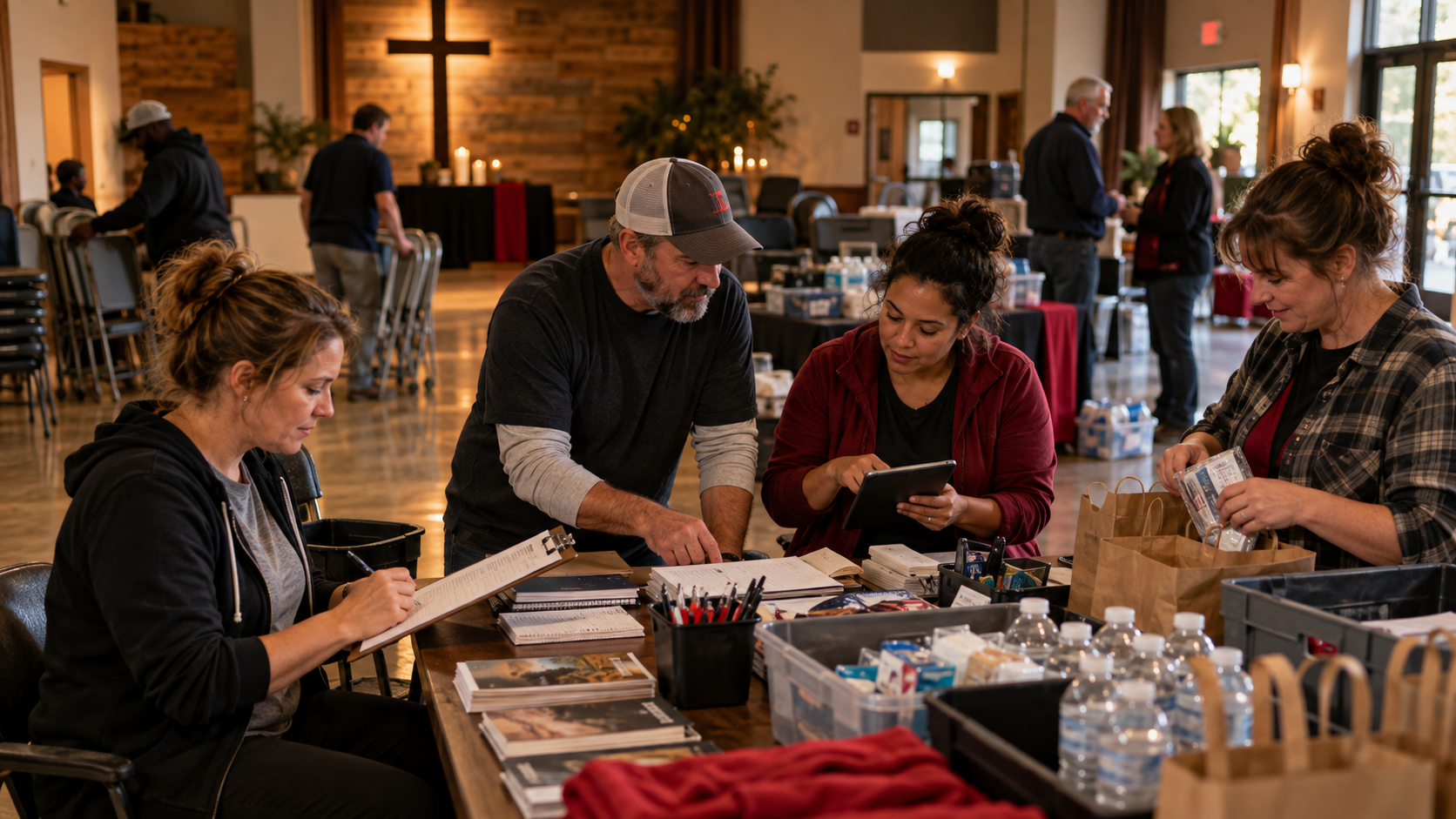
The food was served. Volunteers packed the supplies. The prayer table came down. Photos were collected, and everyone headed home.
Yet someone may still be waiting for a phone number you promised to send. Another person may have asked for prayer. A volunteer may have noticed a need nobody had time to discuss during the event.
That is where Christian ministry follow-up begins.
Follow-up does not require a complicated system. Instead, it means finishing what the ministry said it would do and paying attention to what should happen next.
Showing Up Once Matters. Following Through Builds Trust.
People often remember whether someone came back, called when they said they would, prayed again, or provided the information that was promised.
Follow-through turns good intentions into dependable ministry.
Christian Ministry Follow-Up Can Focus on Four Simple Priorities.
Every outreach event is different. However, most post-event work can be organized around people, prayer, promises, and learning.
People
Identify anyone who clearly invited continued contact or needs a next step the ministry agreed to provide.
Prayer
Carry appropriate prayer requests beyond the event and make sure private requests stay private.
Promises
Finish commitments such as sending resource information, checking a referral, or connecting someone with the right ministry contact.
Learning
Ask volunteers what worked, what caused confusion, and what the team should improve before the next outreach.
Use the First 24 Hours to Capture What the Team Might Forget.
Details disappear quickly after a busy outreach event.
Therefore, take a few minutes while the experience is still fresh. Record practical commitments, resource questions, volunteer observations, and follow-up tasks.
Keep the notes focused.
The goal is not to create a detailed file about every person who attended. Instead, capture only the information needed to complete legitimate ministry next steps.
Start With Anything the Ministry Promised Someone.
A small promise can matter greatly to the person waiting for it.
Perhaps a volunteer said they would find an updated food resource. Maybe someone promised to send the next worship-night date. Another person may be expecting a call about clothing assistance.
First, identify those commitments.
Next, assign each one to a real person on the team. A task with no owner can easily become a promise that nobody completes.
Follow Up Where Someone Actually Invited Follow-Up.
Meeting someone during outreach does not automatically create permission for repeated messages or calls.
If someone clearly requested contact, follow the agreed path. If they did not, avoid turning one ministry interaction into unwanted communication.
A simple question during outreach can help: “Would you like someone from the ministry to follow up with you?”
Clear permission protects dignity and keeps follow-up relational rather than intrusive.
Prayer Requests Should Not Disappear When the Event Ends.
Someone may have shared a burden that cannot be solved in one conversation.
In those cases, continued prayer can become part of ministry follow-up. However, keep private details within the boundaries the person expected.
For people who want ongoing community prayer, Lift My Prayer provides a prayer community where people can share requests, receive encouragement, pray for others, and return with testimonies.
Lift My Prayer also provides a private contact pathway for people who want prayer without automatically publishing their request.
Complete Resource Referrals Instead of Leaving Them Half-Finished.
Sometimes the event reveals a need that another ministry is better equipped to address.
Before sending information afterward, verify the resource when practical. Check the current process, contact information, and any important appointment requirements.
Then explain the next step clearly.
This turns a vague suggestion into a more useful handoff without promising an outcome another organization controls.
Practical Care Follow-Up May Lead to a Trusted Local Ministry.
Someone may need food or clothing after the outreach event.
Landmark Bread of Life currently provides weekly meals, food assistance, clothing support, prayer, and Gospel-centered encouragement.
Its Monday dinner is currently open without an appointment, while food boxes and clothing assistance use a request-and-callback process.
Sharing the correct process during follow-up can save someone an unnecessary trip and make the next step much clearer.
Some Follow-Up Needs More Than a One-Time Resource.
A person may be looking for ongoing Christian community, discipleship, prayer, outreach connection, or support while walking through a difficult season.
Unbound Ministry currently provides street outreach, prayer, small groups, worship gatherings, resource connections, and Christ-centered support focused on freedom and restoration.
When that pathway fits the person’s request, a ministry can provide the current information and allow them to decide whether to connect.
TGRM Can Remain a Clear Starting Point After the Outreach Moment.
People may remember the conversation but forget every resource mentioned during a busy event.
The Gospel Rescue Mission Need Help pathway provides a clear place to return for prayer, practical direction, resource connections, and next-step guidance.
Meanwhile, churches, volunteers, and supporters who want to strengthen ongoing outreach can explore the TGRM Partner pathway .
Follow-up becomes easier when people know where to reconnect.
A Short Volunteer Debrief Can Improve the Next Outreach More Than a Long Meeting.
Ask what volunteers noticed while the experience is still fresh.
Keep the conversation practical: what worked, what confused people, what ran out, what questions kept coming up, and what should change next time?
Ask Questions That Lead to Useful Changes.
- What worked especially well during this outreach?
- Where did visitors seem confused?
- Did people struggle to find the location or entrance?
- Which supplies ran low or were barely used?
- What questions did visitors ask repeatedly?
- Did anyone request follow-up that still needs an owner?
- Were our referral resources accurate?
- Did volunteers understand their roles?
- What should we simplify before the next outreach?
- What should we thank God for from this experience?
A Debrief Should Improve the Ministry, Not Become a Search for Someone to Blame.
Outreach rarely goes exactly as planned.
Supplies may arrive late. Weather may change. A location may create more confusion than expected. Volunteers may encounter a situation the team did not anticipate.
Instead of asking who failed, ask what the team learned.
That approach creates room for honest improvement without discouraging the people who faithfully showed up to serve.
Track Outcomes That Help the Ministry Serve Better Next Time.
Social media reach can be useful, but it does not tell the whole story of an outreach event.
Consider tracking practical outcomes instead.
- Number of volunteers who served
- Approximate number of people reached
- Prayer conversations or requests
- Practical resources distributed
- Referral requests that need follow-up
- Follow-up commitments completed
- Common questions or unmet needs
- Partner connections strengthened
- Changes needed before the next outreach
These observations help the team understand what happened without reducing ministry to numbers alone.
Keep Follow-Up Notes Useful Without Collecting Someone’s Entire Story.
Ministry teams may need a name, phone number, email address, prayer request, or simple note about an agreed next step.
Still, more information is not automatically better.
Collect only what the ministry reasonably needs to complete the follow-up. Also, avoid placing sensitive stories into shared documents when a simple task note would be enough.
Respect should continue after the person leaves the event.
If the Ministry Misses a Follow-Up Commitment, Correct It Honestly.
Sometimes a callback is delayed. A volunteer forgets to send information. A referral turns out to be outdated.
When that happens, do not pretend the commitment was never made.
Acknowledge the delay, correct the information, and complete the next step when possible.
Simple honesty can preserve trust even when the process was imperfect.
Not Every Follow-Up Needs to Happen at the Same Time.
Some tasks should happen quickly. Others can wait until the team has rested and gathered better information.
Same Day
Secure important notes, identify urgent commitments, thank key volunteers, and protect any private information collected.
Within 24–48 Hours
Complete promised messages, verify resource information, continue prayer, and resolve straightforward follow-up tasks.
Within the Week
Debrief with volunteers, update resource lists, review outreach lessons, and prepare improvements for the next event.
Before the Next Outreach
Confirm that lessons learned became real changes instead of notes nobody looked at again.
Simple Digital Systems Can Keep Ministry Follow-Up From Falling Through the Cracks.
A small ministry does not need an elaborate CRM before it can follow through consistently.
A clear form, shared task list, resource page, volunteer update, or simple follow-up tracker may be enough.
Churches and Christian ministries that need help creating clearer forms, websites, event pages, ministry systems, graphics, or practical digital pathways can explore Intangible Treasures .
Intangible Treasures provides digital support to churches and ministries so technology can reduce friction rather than create more administrative work.
Businesses With Complex Follow-Up Workflows Need a Different Technical Path.
A commercial organization may need automated form routing, CRM handoffs, customer notifications, order workflows, APIs, webhooks, or private WordPress logic.
For those business-focused systems, BuildRightWeb provides professional WordPress, WooCommerce, custom plugin, integration, and workflow automation services.
Keeping ministry support and commercial development on separate paths allows each type of work to receive the right tools and structure.
The Goal Is Not More Follow-Up Tasks. The Goal Is Faithful Continuity.
Outreach becomes stronger when people discover that the ministry did not disappear as soon as the event ended.
A returned message, continued prayer, accurate referral, or familiar face at the next outreach can quietly communicate: “We meant it when we said you mattered.”
Consistent Presence Can Do What One Large Event Cannot.
A single event may introduce people to the ministry.
Repeated presence allows relationships to grow.
Over time, volunteers begin recognizing neighbors. Community members learn where to ask questions. Partner ministries become easier to coordinate with. Prayer requests can become testimonies.
The ministry also becomes better at understanding what the community actually needs rather than assuming from a distance.
Use This Post-Outreach Follow-Up Checklist Before Closing the Event File.
- Have all promised follow-up messages been assigned?
- Did anyone request continued prayer?
- Are private prayer requests staying private?
- Were important referrals checked before being sent?
- Did every follow-up task receive an owner?
- Were outdated resources corrected?
- Did volunteers have an opportunity to share useful observations?
- Were sensitive notes reduced to only what is necessary?
- Did the team identify at least one improvement for next time?
- Did we thank God, volunteers, churches, and partners who helped?
Frequently Asked Questions About Christian Ministry Follow-Up.
What is Christian ministry follow-up?
Christian ministry follow-up is the work that happens after an outreach interaction or event to continue appropriate prayer, complete promised next steps, provide useful resource information, and strengthen ongoing ministry relationships.
How soon should a ministry follow up after outreach?
Complete urgent commitments as soon as practical. Straightforward messages and referrals often fit within the first 24 to 48 hours, while broader debriefing and planning can happen later in the week.
Should ministries contact everyone who attended an outreach event?
Not necessarily. Follow up where someone requested or reasonably expected continued contact. Avoid turning attendance at a ministry event into unwanted repeated communication.
What should volunteers record after outreach?
Record practical commitments, appropriate prayer needs, resource questions, and observations that help the ministry complete legitimate next steps. Avoid collecting unnecessary personal information.
How can a small church manage outreach follow-up?
Start simply. Assign an owner to each task, use a shared checklist or tracker, keep referral information current, and schedule a short volunteer debrief before planning the next outreach.
Finish the Promise. Continue the Prayer. Carry the Ministry Beyond the Event.
The Gospel Rescue Mission exists to bring prayer, practical care, resource connection, dignity, and the hope of Jesus Christ into communities that need steady support.
Christian ministry follow-up helps that care continue after the public outreach moment ends.
Send the information. Make the call you promised. Keep praying. Correct the referral. Listen to the volunteers. Learn what should change.
Then show up again.