

Christian Ministry Debrief: How Outreach Teams Learn After Serving
A Christian ministry debrief gives volunteers time to pray, review what happened, protect people’s dignity, identify useful lessons, and turn one outreach experience into wiser service the next time.
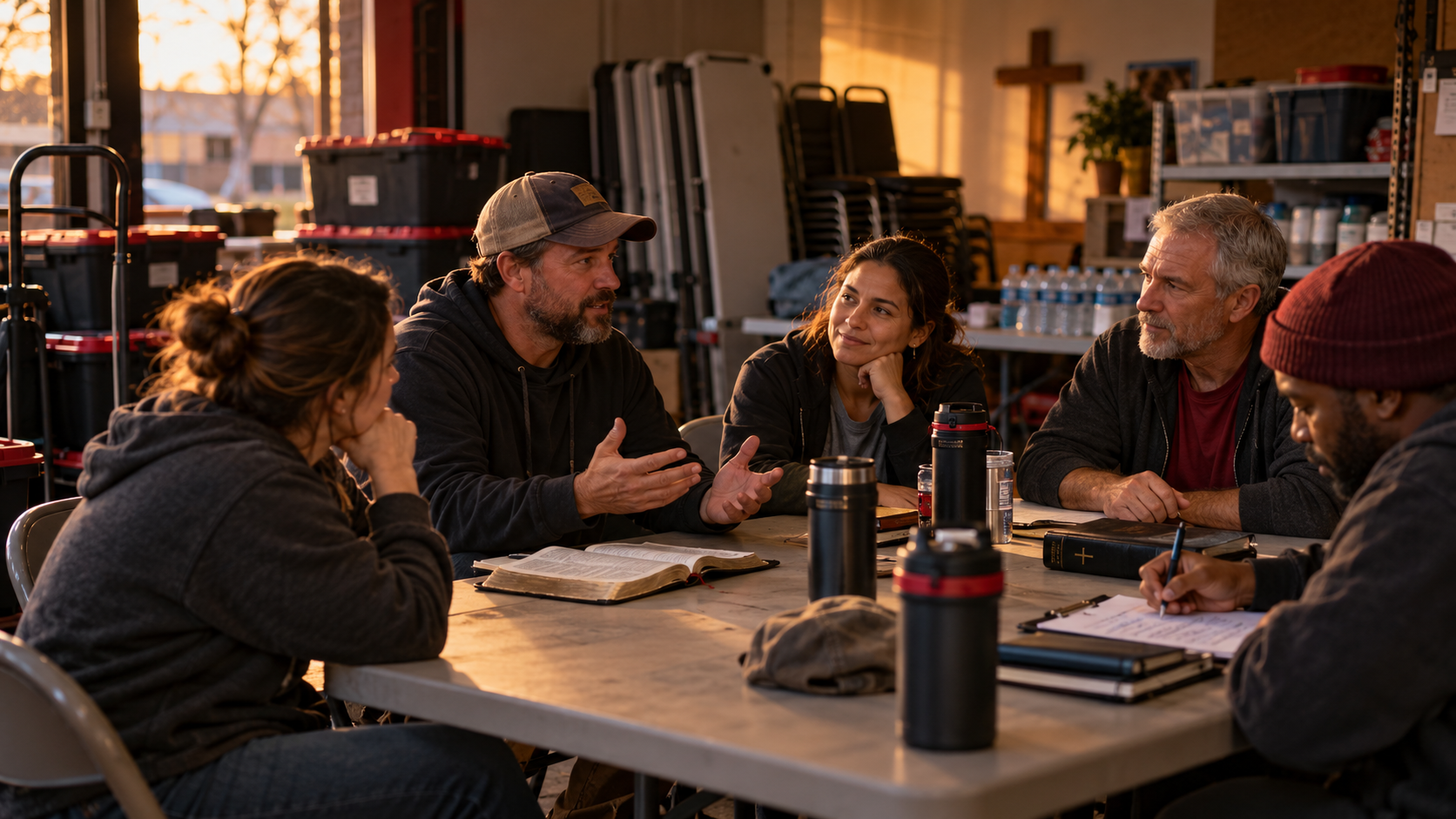
A Christian ministry debrief begins after the tables are folded, the supplies are packed away, and the last volunteer is preparing to leave.
That moment can be easy to overlook. Everyone may be tired. The immediate work is finished, and the natural instinct is to go home.
Yet a short period of prayerful reflection can help a ministry notice what it would otherwise forget.
What needs appeared repeatedly? What helped people feel welcomed? Where did volunteers become confused? Which resource information needs to be updated? What should remain exactly the same next time?
The Gospel Rescue Mission is built around prayer, practical care, resource connections, dignity, consistent outreach, and the hope of Jesus Christ. A healthy debrief can help those values remain visible not only in what a ministry says, but also in how it learns.
A Christian Ministry Debrief Is Different From Participant Follow-Up
Ministry follow-up focuses on the person who was served. A debrief focuses on the team that served.
Those two practices can support each other, but they are not the same.
Follow-up may involve another prayer conversation, a resource connection, an invitation, or a response to a help request.
A Christian ministry debrief asks a different set of questions. What did the team learn? Next, consider what needs attention. Then decide what should change. Finally, identify what worked well and deserves to be protected.
That distinction matters because ministries can serve repeatedly without ever stopping long enough to learn from what happened.
Pray
Begin with gratitude and ask God for wisdom before evaluating the outreach.
Listen
Hear from volunteers who experienced different parts of the ministry.
Notice
Identify recurring needs, confusion, strengths, and important observations.
Decide
Choose a small number of useful changes instead of creating endless action items.
Improve
Carry the lessons forward so the next outreach becomes clearer and stronger.
Pray Before Evaluating the Outreach
A ministry debrief should not begin as a complaint session. It should begin by remembering why the team served in the first place.
Thank God for every conversation, every volunteer, every opportunity to pray, and every person who allowed the ministry into a small part of their story.
Then ask for wisdom.
Volunteers may remember the same outreach differently. Prayer helps move the conversation away from defending personal preferences and toward discerning what would help the ministry serve faithfully.
If the outreach revealed people who still need prayer, Lift My Prayer can provide an additional prayer pathway when it is appropriate and when people choose to share their own requests.
Listen to the Volunteers Who Were Closest to the Work
Leaders do not see every conversation.
A person greeting visitors may notice one kind of problem. Someone distributing practical supplies may notice another. A prayer volunteer may hear needs that never reach the resource table.
Therefore, a useful debrief gives several volunteers room to speak.
That does not mean every observation becomes a new ministry policy. Instead, the team listens for patterns.
If several volunteers describe the same point of confusion, the issue may deserve attention.
Likewise, if volunteers consistently mention something that worked especially well, that strength may be worth protecting.
Review What Happened Without Turning the Debrief Into Blame
A healthy ministry culture can talk about problems without immediately blaming people.
Instead of saying, “That volunteer handled everything badly,” describe what actually happened.
Perhaps guests did not know where to stand. Maybe two volunteers gave different instructions. Perhaps a resource link was outdated. Maybe supplies ran out sooner than expected.
Those are useful observations because they describe something the ministry can address.
Personal criticism rarely produces the same clarity.
Protect People’s Stories During the Christian Ministry Debrief
Outreach often creates deeply personal conversations.
Someone may share a family crisis, housing problem, addiction struggle, financial burden, grief, fear, or private prayer request.
A debrief does not give volunteers permission to retell those stories casually.
Discuss only the information necessary to improve ministry care. Avoid unnecessary names and private details.
For example, the team may need to know that several visitors asked for housing direction. It usually does not need a public retelling of each person’s private circumstances.
Dignity should continue after the person leaves.
Look for Recurring Needs Instead of Isolated Moments
One request may be unique. Five similar requests may reveal something worth reviewing.
Perhaps several people asked where they could find clothing. Maybe multiple guests needed food assistance. Perhaps prayer for grief appeared repeatedly. Maybe several visitors asked about transportation or shelter.
A Christian ministry debrief can capture those patterns without turning people into statistics.
The goal is not to build impressive numbers. The goal is to understand what people are actually asking for.
Patterns can help a ministry decide which resource information needs updating, which volunteers need additional preparation, and which partnerships may become more useful.
Use the Debrief to Check Resource Accuracy
An outreach team may discover that a referral sounded good on paper but did not work smoothly in real life.
A phone number may have changed. An appointment may be required. A service may only operate on certain days. A resource may not provide what volunteers thought it provided.
That is valuable information.
Turn Outreach Lessons Into Better Resource Directions
Near Cincinnati, Landmark Bread of Life provides a useful practical-care connection for meals, clothing support, food assistance, and prayer.
When ministries link or refer to outside resources, the debrief is a good time to ask whether those directions are still clear and accurate.
A referral should reduce confusion, not create another dead end.
Street Outreach Can Teach a Ministry Things a Meeting Room Cannot
Outreach in neighborhoods, shelters, camps, and community spaces exposes ministry teams to needs they may not see from behind a desk.
Unbound Ministry represents an outreach model that intentionally moves toward people in streets, shelters, recovery spaces, and other places of need.
Field ministry can reveal practical realities quickly. Volunteers may learn that a resource is difficult to access, that certain questions appear repeatedly, or that a different kind of conversation is needed.
Those lessons are most useful when someone remembers to capture them afterward.
Use Five Questions for a Simple 20-Minute Ministry Debrief
A debrief does not need to become another long meeting.
In many cases, twenty focused minutes can capture the most useful lessons.
Do Not Try to Fix Everything at Once
A good debrief may uncover ten possible improvements.
That does not mean the team should attempt all ten before the next outreach.
Too many changes can create more confusion than improvement.
Instead, separate observations into three simple groups: what needs attention now, what can wait, and what may not require action at all.
Then choose the changes that will most clearly improve care, communication, safety, dignity, or volunteer effectiveness.
Keep
Protect practices that served people well and helped volunteers stay focused.
Improve
Choose one or two realistic changes that can strengthen the next outreach.
Review Later
Save larger ideas for thoughtful discussion instead of forcing immediate change.
A Christian Ministry Debrief Should Include Digital Friction
Sometimes the problem becomes visible only after people try to use the ministry’s online tools.
Perhaps someone could not find the help form. Maybe a volunteer repeatedly had to explain where the prayer page was located. A resource link may have been difficult to open on a phone. An event page may have left visitors unsure about the time or location.
Those observations belong in the debrief because digital confusion can become ministry confusion.
Improve the Digital Path When Volunteers Notice Friction
Intangible Treasures supports churches and Christian ministries with ministry-focused websites, forms, prayer tools, outreach pages, and practical digital systems.
If the problem is technical rather than editorial, BuildRightWeb provides WordPress development, stability work, support, integrations, and technical systems.
The important principle is simple: when volunteers repeatedly have to explain around a broken or confusing digital pathway, that pathway deserves attention.
Record Lessons Without Creating Another Complicated System
A ministry does not need a large database to learn from outreach.
A short internal note can be enough.
Record the date, the type of outreach, the most useful lessons, any resource information that needs checking, and the one or two actions the team agreed to complete.
Avoid filling the document with unnecessary private information about people who were served.
The record exists to help the ministry remember what it learned. It should not become a collection of personal stories that never needed to be stored.
Notice Testimonies Without Turning People Into Content
Outreach may produce encouraging stories.
A prayer may have been answered. Someone may have taken an important next step. A volunteer may have witnessed an unexpected moment of compassion or reconciliation.
Those moments are worth thanking God for.
However, not every meaningful story belongs on social media or a website.
A person’s vulnerable moment should not automatically become ministry marketing.
When sharing a testimony publicly, seek appropriate permission, remove unnecessary private details, and make sure the story honors the person rather than using them.
Some of the most meaningful ministry moments can remain between the people involved and God.
Let Recurring Prayer Needs Inform Future Ministry
A debrief may reveal more than operational lessons.
Volunteers may notice recurring spiritual and emotional burdens. Fear, grief, family conflict, financial pressure, addiction, loneliness, discouragement, or uncertainty may appear repeatedly.
Those themes can help shape how the ministry prays before its next outreach.
They can also remind volunteers to make prayer visible and easy to request.
Lift My Prayer can provide another voluntary prayer connection for people who want prayer support beyond the immediate outreach setting.
Ask How the Volunteers Are Doing Too
Ministry can be emotionally demanding.
A volunteer may hear difficult stories. Another person may leave feeling that they did not know what to say. Someone else may carry a conversation home in their mind.
Therefore, the debrief should not only evaluate performance. It should also make room for volunteer care.
Care for the Team Before Everyone Goes Home
Ask whether anyone needs prayer. Clarify questions. Remind volunteers that they are not responsible for fixing every person’s life.
Healthy volunteers are more likely to serve consistently, compassionately, and within appropriate boundaries.
Close the Loop Before the Next Outreach
A debrief has little value if every decision disappears afterward.
If a resource link needs checking, assign someone to verify it. Volunteers who need clearer instructions should receive an updated guide. Missing supplies can be noted before the next outreach. Likewise, correct any online page that caused confusion.
Then tell the team what changed.
Closing the loop shows volunteers that their observations mattered. It also helps create a culture where reflection leads to action.
People interested in serving, supporting, or strengthening TGRM’s outreach can begin through the Partner With the Mission pathway.
Ministry Learning Can Strengthen the Whole Resource Network
A debrief does not only help one event. It can help a ministry use every connected resource more thoughtfully.
Different organizations serve different roles. Learning from actual outreach helps volunteers understand which connection is most useful in a particular situation.
The Outreach May Be Finished, but the Learning Does Not Have to Be
A Christian ministry debrief is not about making outreach perfect.
It is about becoming more attentive.
Pray about what happened and listen carefully to the people who served. Protect the dignity of those who received care while noticing recurring needs. Correct avoidable confusion, keep what worked well, and improve what genuinely needs attention.
Then carry those lessons into the next opportunity to serve.
When a ministry learns with humility, experience becomes more than something that happened. It becomes wisdom that can help the team listen better, communicate more clearly, serve more faithfully, and keep pointing people toward the hope of Jesus Christ.