
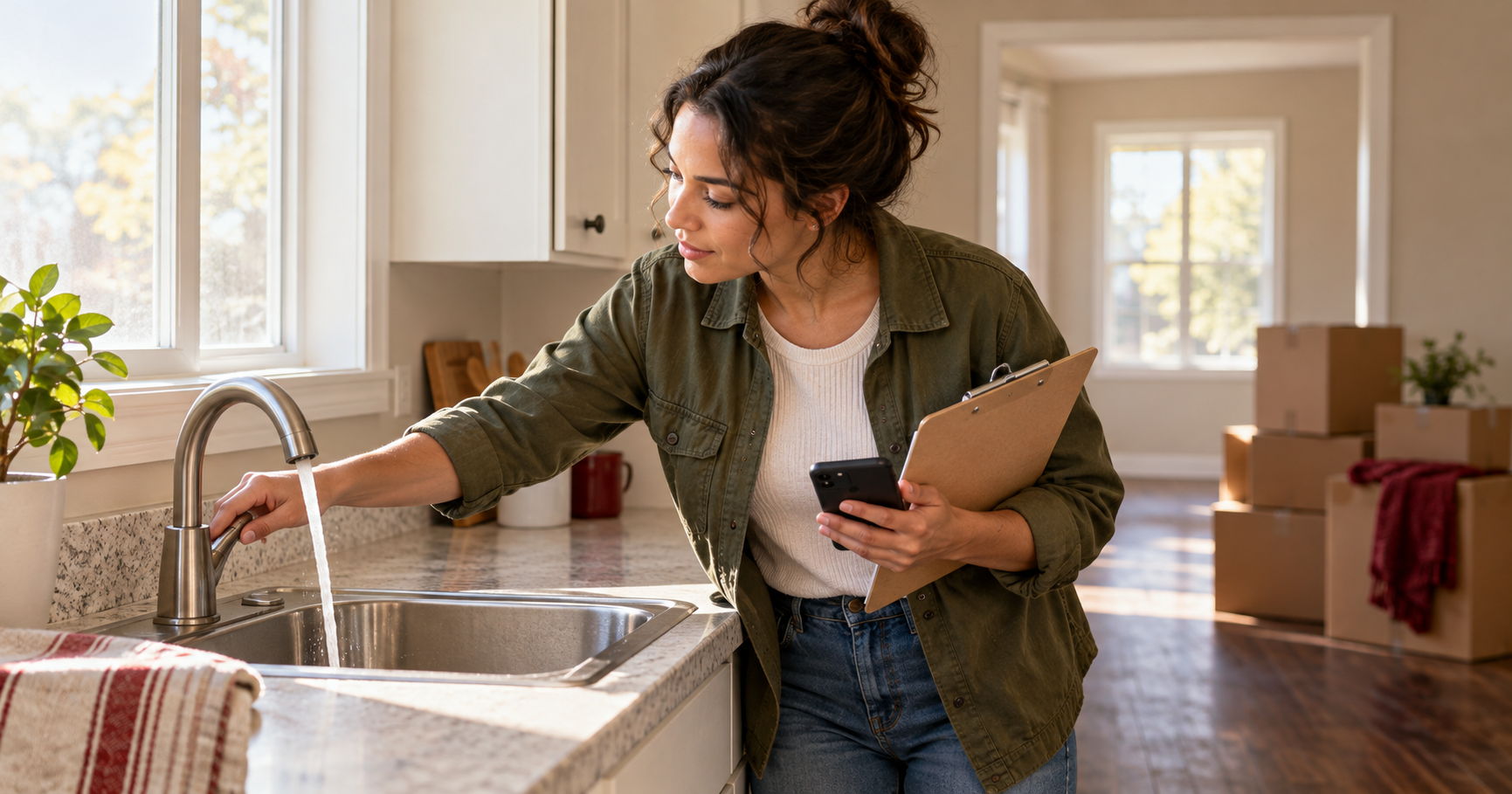

Rental Move-In Checklist: 14 Things to Check Before You Unpack
A new home should begin with clear information. Before moving your belongings inside, check the essentials, record existing damage, and know who to contact when something needs attention.
A rental move-in checklist helps you understand the condition of a home before you settle in. It gives you a simple way to check safety features, appliances, plumbing, and other essentials.
However, moving day can be busy. keys change hands, and everyone wants to get comfortable. In that rush, small problems can be easy to miss.
For example, a dripping pipe, a broken window lock, or an appliance that does not work may become a bigger problem later. As a result, recording these issues early can make communication easier.
However, you do not need professional inspection skills to begin. Take your time, look carefully, and report concerns through the property’s normal process.
This guide walks through 14 practical move-in checks. It also includes a simple reporting example and useful resources for people navigating a housing transition.
Start Your Rental Move-In Checklist With Safety
Before checking how the home looks, make sure it is safe to enter, secure, and leave in an emergency.
Test Doors, Keys, and Locks
First, confirm that you received the correct keys, codes, or access devices. Also, make sure each main door opens and closes normally.
Next, test locks without forcing them. Next, check whether exterior doors close securely. If something sticks or fails, record it and tell the property manager.
Check Smoke and Carbon Monoxide Alarms
First, look for smoke alarms in the appropriate areas of the home. Then, use the test button according to the manufacturer’s instructions.
Also check for carbon monoxide alarms where required or appropriate. Next, ask the property manager about any missing or nonworking alarms.
The U.S. Fire Administration recommends testing smoke alarms at least once a month.
Emergency Exits and Window Safety
Find Emergency Exits
First, locate the main exit and any other available escape routes. Also, check hallways, stairways, and doors for blocked access.
In an apartment building, learn the evacuation procedures. Next, identify the exit stairs and a safe outdoor meeting place.
The U.S. Fire Administration’s escape guide explains how to plan and practice a safe exit.
Inspect Windows and Screens
First, open and close windows that are designed to operate. Then, check locks, latches, and screens for damage.
Next, look for cracked glass, loose frames, or windows that will not close properly. Do not lean out of windows or remove safety devices.
Check Plumbing, Moisture, and Kitchen Equipment
Water problems and broken equipment can interrupt daily life. These checks help you notice issues before the rooms are full of belongings.
Run the Faucets Briefly
First, check the kitchen and bathroom faucets. Next, look for normal water flow and visible leaks.
When water service is available, check whether hot and cold water work as expected. Also, report any major pressure problems or unusual water conditions.
Check Toilets, Sinks, and Drains
First, flush each toilet once. Next, watch for running water, leaks around the base, or a poor flush.
Next, run water in the sinks and shower briefly. Then, notice whether water drains normally or collects.
If you see a serious leak, stop using the fixture and report the issue promptly.
Moisture Problems and Kitchen Appliances
Look for Damp Spots and Musty Odors
First, check near sinks, ceilings, windows, bathroom corners, and exposed plumbing. Also, notice stains, peeling paint, soft surfaces, or musty odors.
The Environmental Protection Agency recommends that renters report plumbing leaks and moisture problems promptly to the building owner or manager.
Do not disturb large suspicious areas or attempt major repairs yourself.
Test the Included Kitchen Appliances
First, confirm which appliances your lease includes. Then, check the refrigerator, freezer, stove, microwave, and dishwasher as applicable.
Next, look for visible damage and signs that something is not working. Finally, operate appliances only according to their instructions.
If you notice a gas smell, do not test appliances or operate electrical switches. Leave the area and follow emergency instructions.
Review Comfort, Visible Damage, and Cleanliness
Once the major systems are checked, look at the details that affect daily living and the condition of the property.
Check Heating, Cooling, and Ventilation
If the home has heating or cooling equipment, confirm how the controls work. Then, test normal settings when safe.
Next, check bathroom ventilation and any installed exhaust fans. Report unusual noises, nonworking controls, or visible damage.
Test Lights, Switches, and Accessible Outlets
First, turn room lights on and off. Look for broken switch covers, damaged outlets, or exposed wiring.
Do not open electrical panels, remove outlet covers, or touch damaged wiring. Instead, ask qualified maintenance staff to investigate electrical concerns.
Documenting Damage and Checking Cleanliness
Photograph Existing Surface Damage
First, check walls, ceilings, doors, countertops, and flooring. Record scratches, holes, stains, loose tiles, or other visible damage.
Next, take wide photographs to show the location. Then take close-up photographs to show the problem.
Finally, keep the original files with their dates. Avoid posting photos of your home, address, or personal documents publicly.
Check for Pests and Cleaning Problems
First, look inside cabinets, around baseboards, and near kitchen and bathroom fixtures.
Then, watch for visible insects, droppings, damaged screens, or unusual odors. Record concerns and ask the property manager about the next steps.
Do not mix cleaning chemicals or use hazardous pest treatments without proper guidance.
Finish the Move-In Inspection With Clear Records
Your final checks help connect the physical inspection with the agreements and people responsible for the property.
Confirm Utilities and Service Details
First, review which utilities are included in the rent. Confirm any accounts that must be placed in your name.
Next, ask how electricity, gas, water, trash, internet, and other services are handled where applicable.
Most importantly, keep account and service information private. Then, contact each provider through its verified website or telephone number.
Send a Written Move-In Condition Report
First, review the property’s official inspection form, if one is provided. Next, add clear descriptions and photos of existing issues.
Then, send your report through the approved maintenance or management channel. Finally, save the submission and any response.
However, deadlines and inspection requirements vary by location and lease. Check the rules that apply to your rental home.
How to Document a Problem Clearly
A useful report explains what is wrong, where it is, and when you noticed it.
Be Specific
Example: Kitchen cabinet beneath the sink.
Describe What You See
Example: Water appears below the pipe when the faucet runs.
Keep Evidence
Example: Two dated photographs and a copy of the maintenance request.
Try to describe observations rather than guessing the cause. For example, “Water is collecting beneath the sink” is more useful than assuming a particular pipe needs replacement.
For a simple method of organizing paperwork and private records, see our TGRM article about organizing important documents .
A Simple Move-In Maintenance Message
You can adapt the following example when you need to report a nonemergency condition. Use the contact method required by your property manager.
Resources That May Help During a Housing Transition
A move can bring more than boxes and paperwork. Some households also need food, clothing, reliable information, or someone to talk with.
Housing and Tenant Information
If you have questions about housing assistance, begin with HUD’s rental assistance information . For local community referrals in the United States, you can also visit 211 .
However, your lease and local laws determine many of your specific rights and responsibilities. Seek local tenant guidance if a disagreement remains unresolved.
Practical Help and Resource Direction
The Gospel Rescue Mission’s Need Help page provides a starting point for prayer, compassionate contact, and possible resource direction. However, it is not an emergency housing service.
In the Cincinnati area, Landmark Bread of Life offers information about requesting food boxes and clothing. These services are by appointment, with scheduling confirmed through a callback.
Fellowship and Prayer
At the same time, a housing transition can also feel isolating. Unbound Ministry shares opportunities for Christian fellowship, small groups, and worship in the Cincinnati area.
If you would like private prayer, visit the Lift My Prayer contact form and select Private Prayer Request. Do not include passwords, financial details, or sensitive rental documents.
Helping Organizations Communicate Clearly
People searching for housing and practical resources need clear contact pages, accurate instructions, and understandable forms.
For churches and Christian organizations improving their resource websites, Intangible Treasures offers ministry-focused digital support as capacity allows.
For businesses and organizations seeking professional WordPress development or website improvements, BuildRightWeb provides paid website and technical services.
However, these website-service organizations are included as communication resources, not as rental assistance or housing providers.
Rental Move-In Checklist: Frequently Asked Questions
Should I inspect a rental home before unpacking?
Yes, when practical. For example, it is easier to see existing damage and test basic features while rooms are mostly empty. Use any official move-in inspection process required by your lease.
Should I take photos during the move-in inspection?
Clear, dated photographs can help document the property’s condition. However, follow applicable rules and avoid photographing other people’s private information. Finally, keep your records secure.
What if something is broken when I move in?
First, record what you observe and notify your landlord or property manager through the appropriate process. Then, keep a copy of the report. For immediate hazards, prioritize safety.
Does every rental have the same move-in rules?
No. Inspection forms, deposit rules, reporting deadlines, and repair responsibilities can vary by location, housing program, and lease. Therefore, check the requirements that apply to your property.
What is the most important first step?
Start by checking immediate safety concerns. Then document the home’s current condition. Finally, make sure you know how to report maintenance problems.
Before You Unpack, Give Your New Home a Careful Look
A new place to live is an important transition. Taking time to check the basics can help you notice problems, protect important records, and communicate with confidence.
You do not need to solve every issue on moving day. Focus first on safety. Record what you see. Then follow up through the right channels.
As a result, a thoughtful beginning can make the next few weeks more manageable.